
Roof Systems And Replacement

Commercial Roofing Services in Harrisburg

Four Roof Systems Plus Full Tear-Off and Replacement

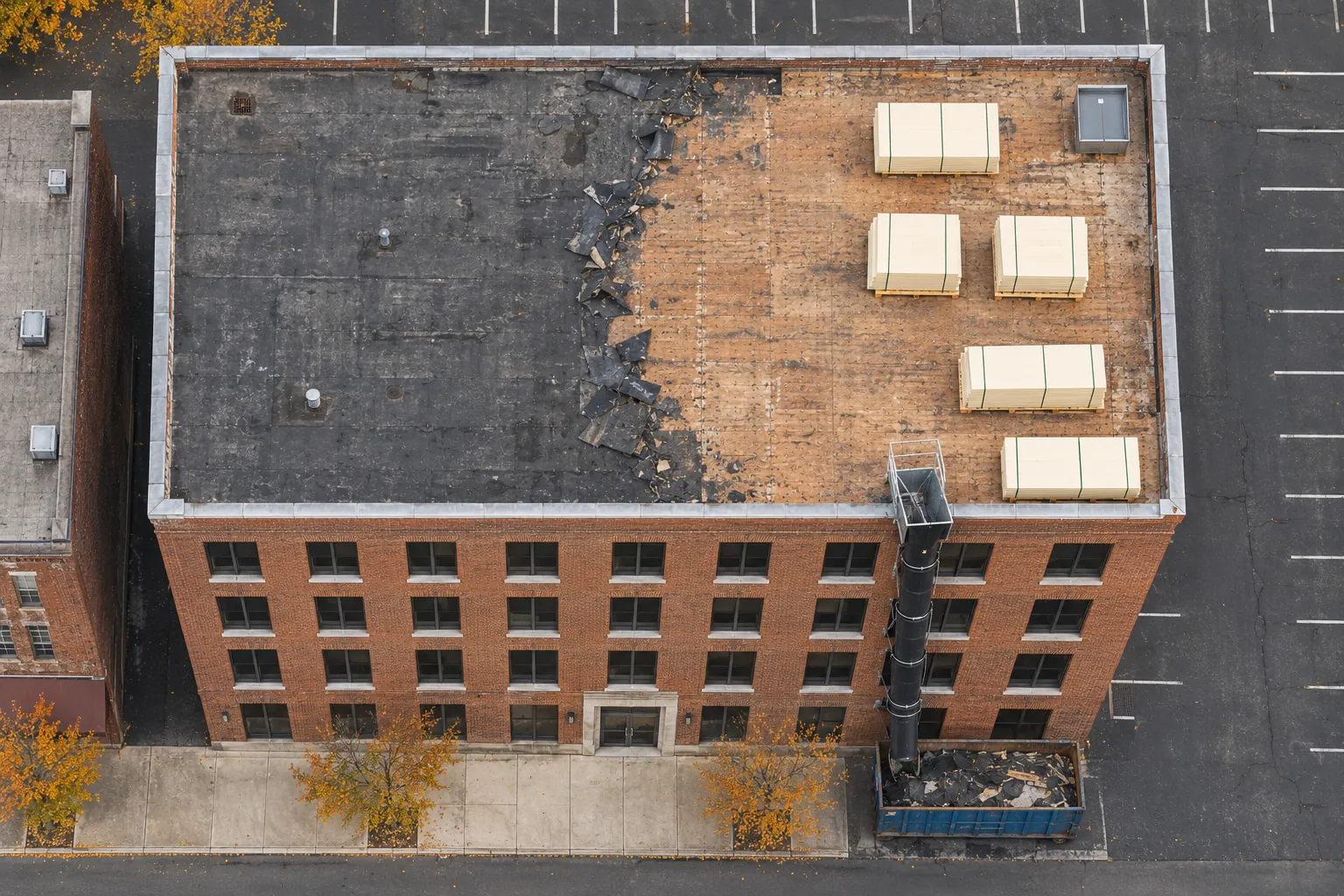
We offer commercial roofing services in Harrisburg for TPO, EPDM, industrial, and metal roofs, along with complete tear-off and replacement of failing roof assemblies.

Top-down view of a brick building roof mid tear-off, half old black membrane and half bare deck with insulation bundles

Commercial Roofing Services in Harrisburg by Roof System

Our commercial roofing services in Harrisburg start with matching the system to the building. Each card shows where that system fits best.

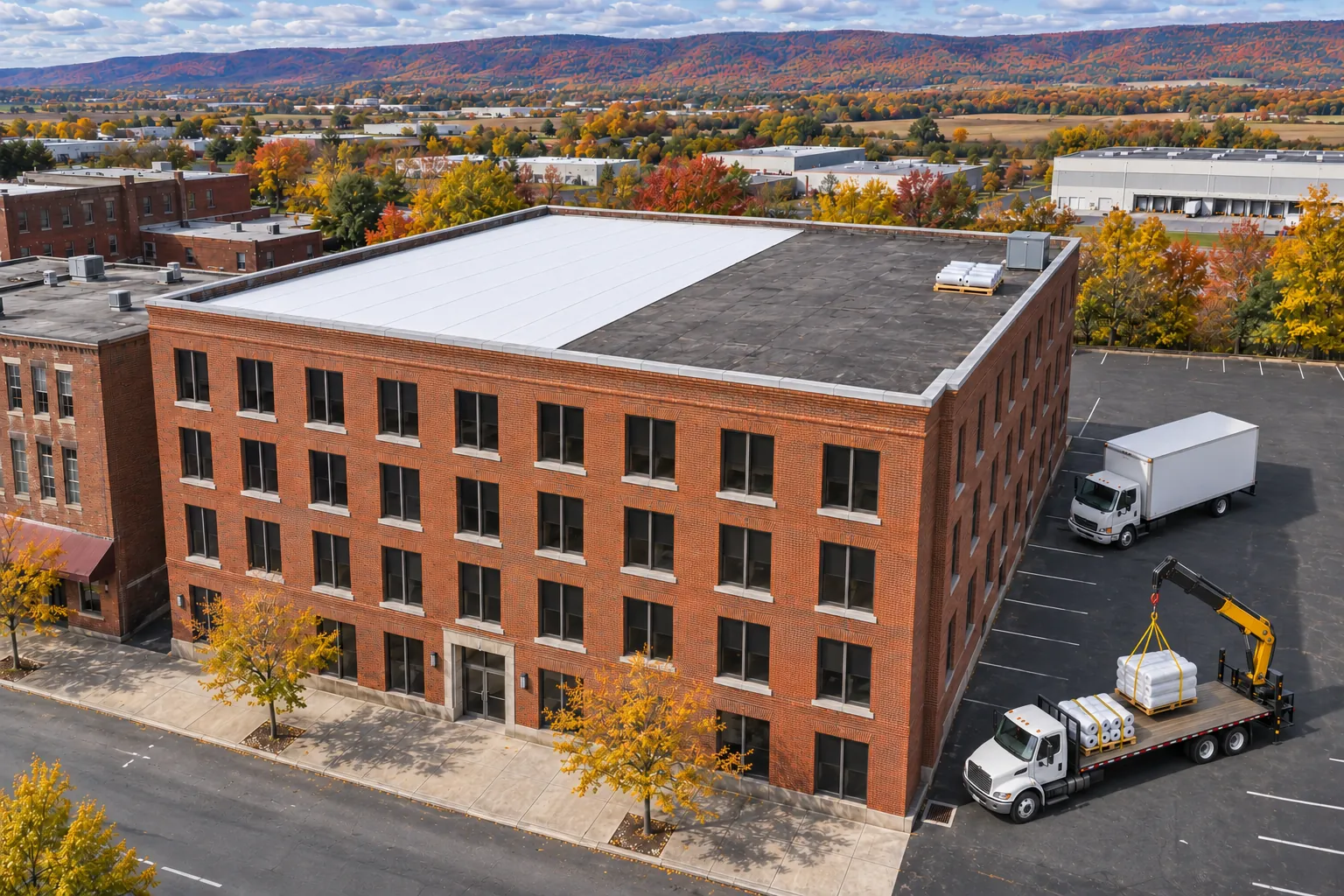
Top-down view of a roofer guiding a hot-air welder along a seam on a white TPO roof near the parapet

TPO Roofing

Slope
Flat to low slope
Seams
Hot-air welded
Common On
Offices, warehouses

A single-ply white sheet with welded laps, chosen for flat offices and warehouses where summer heat and rooftop service traffic both need planning.

Read about TPO roofing
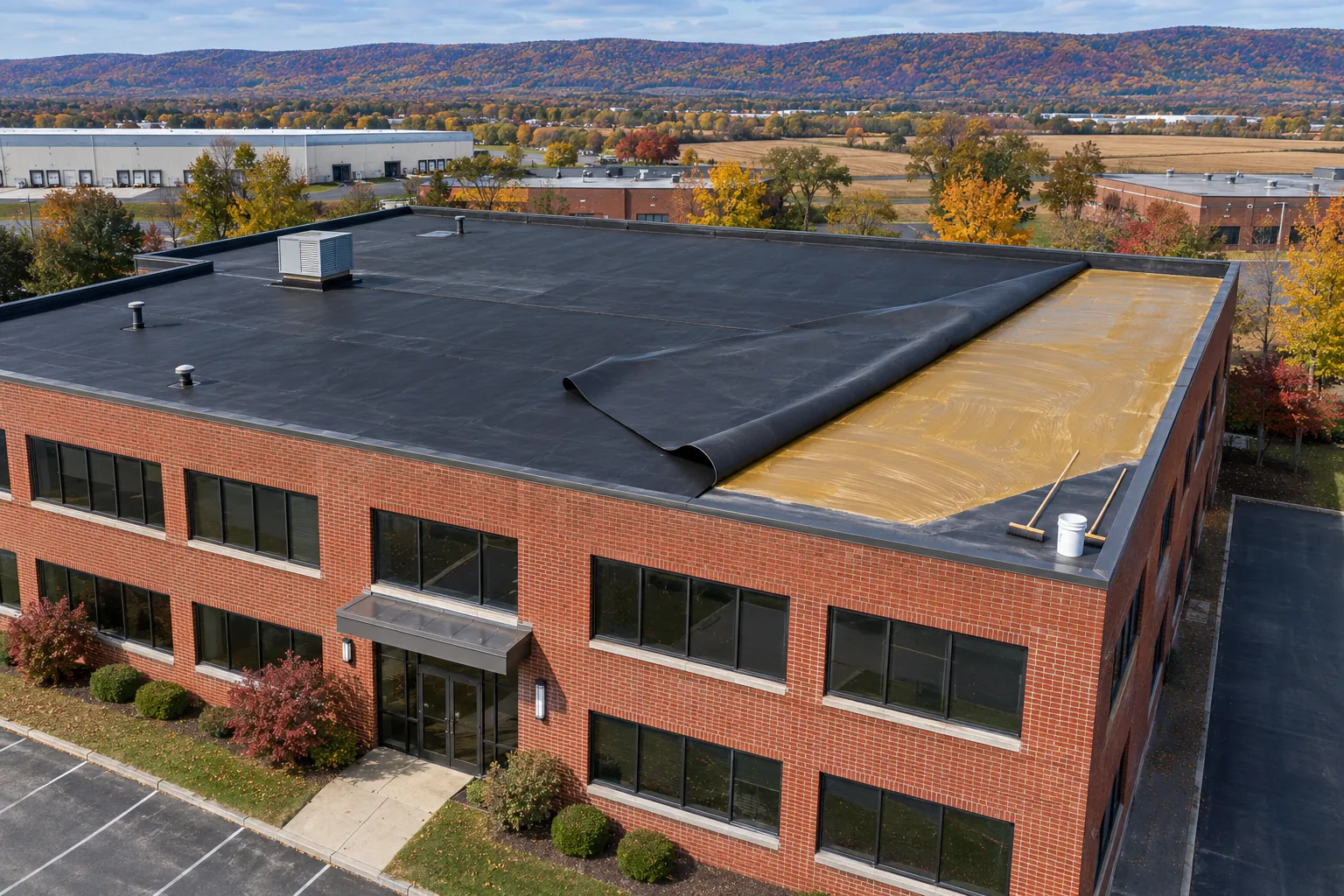
Black EPDM membrane being rolled out over fresh adhesive on a two-story brick office roof

EPDM Roofing

Slope
Flat to low slope
Seams
Taped or adhered laps
Common On
Multi-level offices

Synthetic rubber in large sheets, a common pick for multi-level buildings with brick parapets and older penetrations that need rebuilding.

Read about EPDM roofing
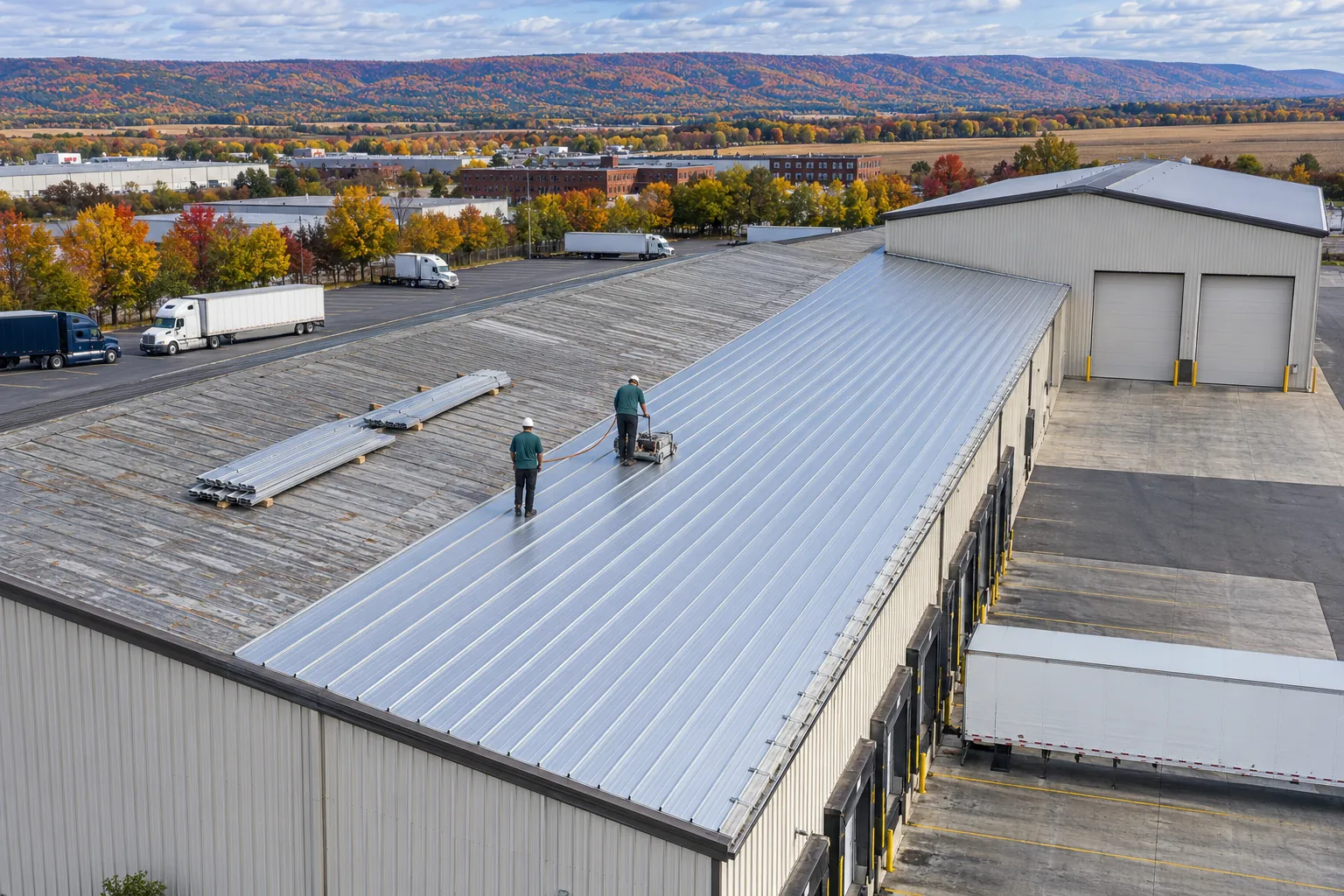
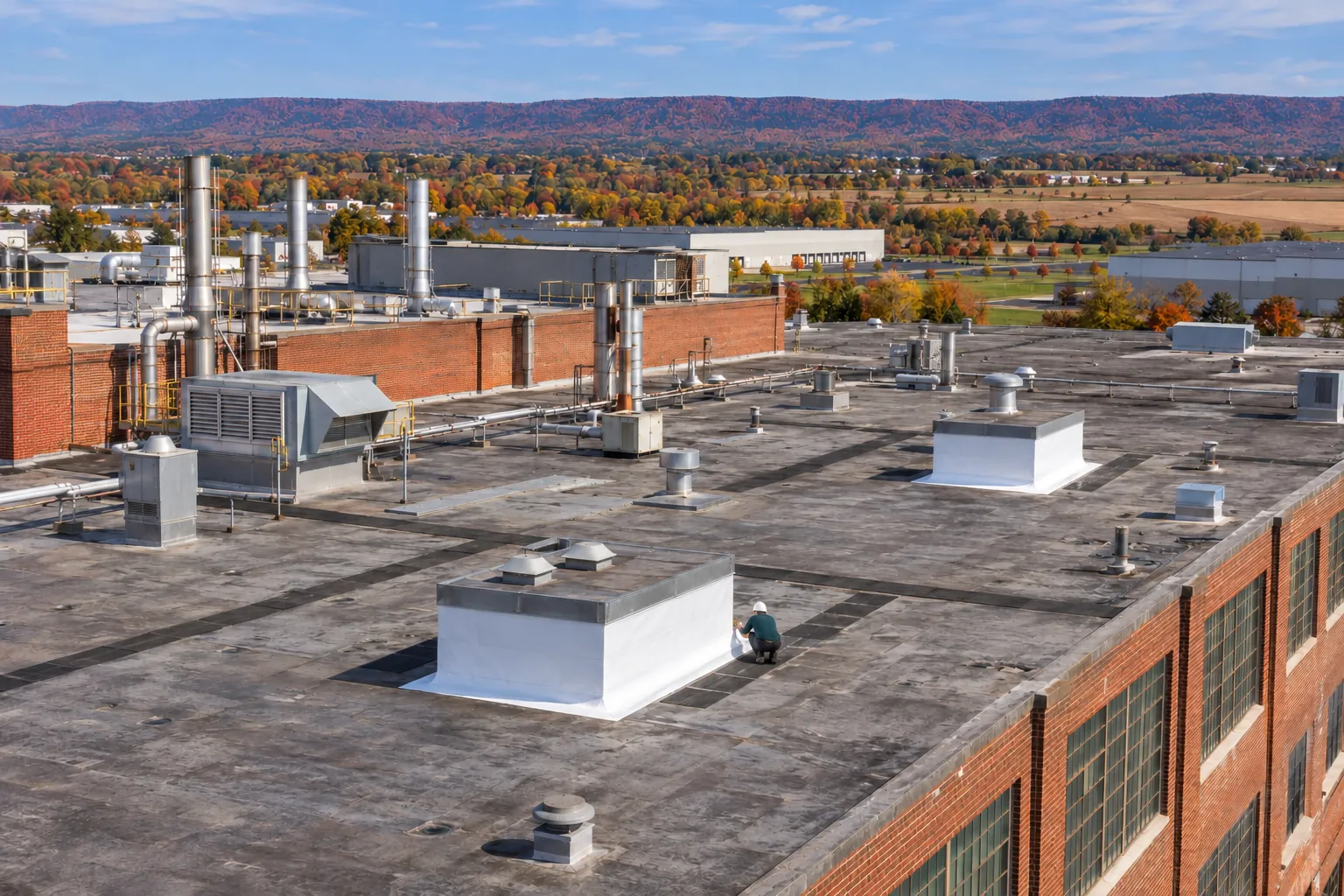
Industrial flat roof with exhaust stacks, ducts, and rooftop units, with a roofer working beside a unit curb

Industrial Roofing

Roof Area
Large, in sections
Key Detail
Equipment curbs
Common On
Plants, distribution

Sectioned replacement for plants and distribution centers, scheduled around docks, production lines, refrigeration, and the equipment above them.

Read about industrial roofing

Which Roof System Fits Which Building

Use this as a starting point before the inspection. Deck condition and equipment often change the answer.

Building TypeCommon FitWhat We Check First
Downtown office, several roof levelsEPDM or TPOWall terminations and water from upper roofs
Logistics warehouse, long flat runsTPODrain locations, curbs, and dock schedules
Food distribution centerTPO or industrial scopeRefrigeration curbs and product protection
Manufacturing plantIndustrial scopeExhaust, equipment clearance, production areas
Shop or farm storage buildingMetal panelsFraming, condensation, and openings
Older brick building with parapetsEPDM or TPOMortar, coping, and flashing height at each wall

Not Sure Which System Your Building Needs?

An inspection answers that. We check the deck, insulation, and equipment and recommend a system in writing.

Get Free Estimate
What To Have Ready
  • What the building is used for
  • Current roof type if known
  • Previous proposals to compare
  • Rough roof size

How Every Roofing Service Moves From Inspection to Close-Out

Whatever the system, each job moves through four stages, and the proposal tells you what happens in each.

Plain flatbed with a knuckle crane lifting roofing material to a brick building roof beside a plain box truck
  1. 1

    Inspect Your Roof

    Field, edges, drains, curbs, and the layers underneath are checked, with core samples wherever insulation might be wet. We also note hatches, hoist spots, and ground staging.

  2. 2

    Write the Scope

    The proposal names the system, attachment, insulation, flashing details, layers removed, and how unexpected deck damage is priced.

  3. 3

    Install by Section

    Crews tear off only the roof area they can close each day, repair the deck, and set insulation and membrane while tenants and docks keep working below.

  4. 4

    Close Out on the Roof

    A final walk covers seams, flashing, drains, and walkways, and the owner receives the material and system details.

Commercial Roof Replacement in Harrisburg

Full replacement is offered on every system. These signs usually mean repairs have run their course.

  • Wet Insulation Across Large Areas

    Core samples show water spread through the boards, so patching the membrane above leaves a wet roof in place.

  • Two Roofs Already on the Building

    Another layer adds weight and hides problems. Tear-off lets us repair the deck and start clean.

  • When to Replace a Commercial Roof Instead of Repairing

    Leaks keep returning at different seams and flashings, showing the membrane has reached the end of its service.

  • Drainage That Needs Rebuilding

    Ponds that last for days call for tapered insulation and drain changes that only a replacement allows.

  • Equipment Layout Changing

    New units or removed equipment are easier to detail well when the whole roof is being rebuilt, with curbs raised to match the new insulation.

  • Flashing Failing at Every Wall

    When terminations and counterflashing leak along most walls, rebuilding them with a new membrane costs less than chasing each joint year after year.

  • Storm Damage Spread Across the Field

    Hail bruising or wind damage across large areas, documented by location during a post-storm inspection, often points to replacement over spot repair.

Questions About Roofing Services and Replacement

Snow And Moisture
Should heavy wet snow and ice at gutters be discussed before reroofing?

Yes. Snow and ice at gutters affect drainage and access, and they can point to structural concerns that need a separate evaluation. We review what you have seen and plan snowmelt paths in the new layout, especially where upper roofs drain onto lower ones or toward equipment curbs.

Gutter size, downspout locations, and snow guards on metal sections are part of that same plan.

Could reroofing alone solve condensation above an older brick office?

Maybe not. When indoor humidity and air leakage stay the same, condensation can keep wetting the underside of the deck. We look at the roof assembly and the moisture conditions inside, and the scope can add insulation and air control if those are the cause rather than rain.

Storms And Permits
What does a post-hail inspection tell us before an insurance decision?

It records the roof condition and the damage found, tied to locations on the roof. We separate repairable details from wider assembly damage. Coverage depends on the policy and the cause of loss; our findings support that conversation, and the insurer makes its own decision.

Photos and core results are organized by roof area so an adjuster can match each finding to a spot on the roof.

What should a Harrisburg owner clarify about permits before choosing a reroof date?

Find out what review the scope needs before fixing a date. Pennsylvania uses the Uniform Construction Code, and questions about a specific project go to the reviewing authority. We provide a written description of layers kept or removed, new materials, and equipment changes to support that review.

Replacement
What Does a Commercial Roof Replacement Include?

Tear-off of the layers named in the scope, deck repair, new insulation and cover board, the new membrane or panels, and new flashing at curbs, walls, drains, and edges. A good proposal also explains how hidden deck damage found during tear-off is handled and priced, and which equipment trades are needed.

Can We Replace Only Part of the Roof This Year?

Often, yes. Large roofs can be replaced in phases when one area fails first and the rest has more service left. The new section is tied into the old roof with a proper transition, and the plan shows which areas follow in later phases. Phasing lets owners budget across two or three years while the worst section stops leaking now.

See all thirty answers on the FAQ page

Get Commercial Roofing Services in Harrisburg

Tell us about the building and the roof. We will inspect it and recommend the system and scope that fit.

Call Us (272) 271-4248