Common Problems With EPDM Roofs at Old Pipes
- You See
- Cracked boots, gobs of sealant, and loose rubber around unused pipes.
- What It Means
- Makeshift closures lose their bond over time. Removing the pipe or building a new flashing ends the repeat leak.
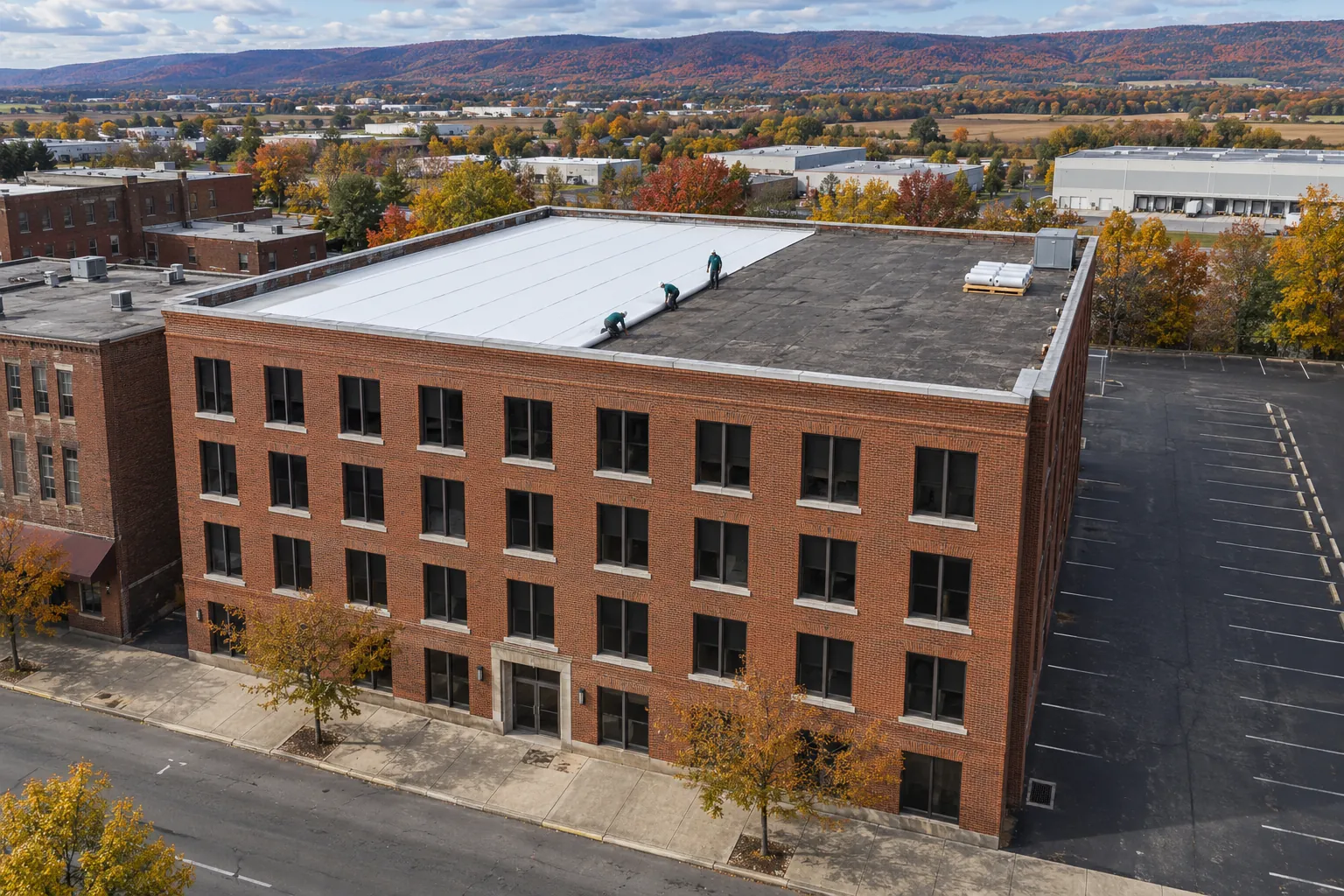
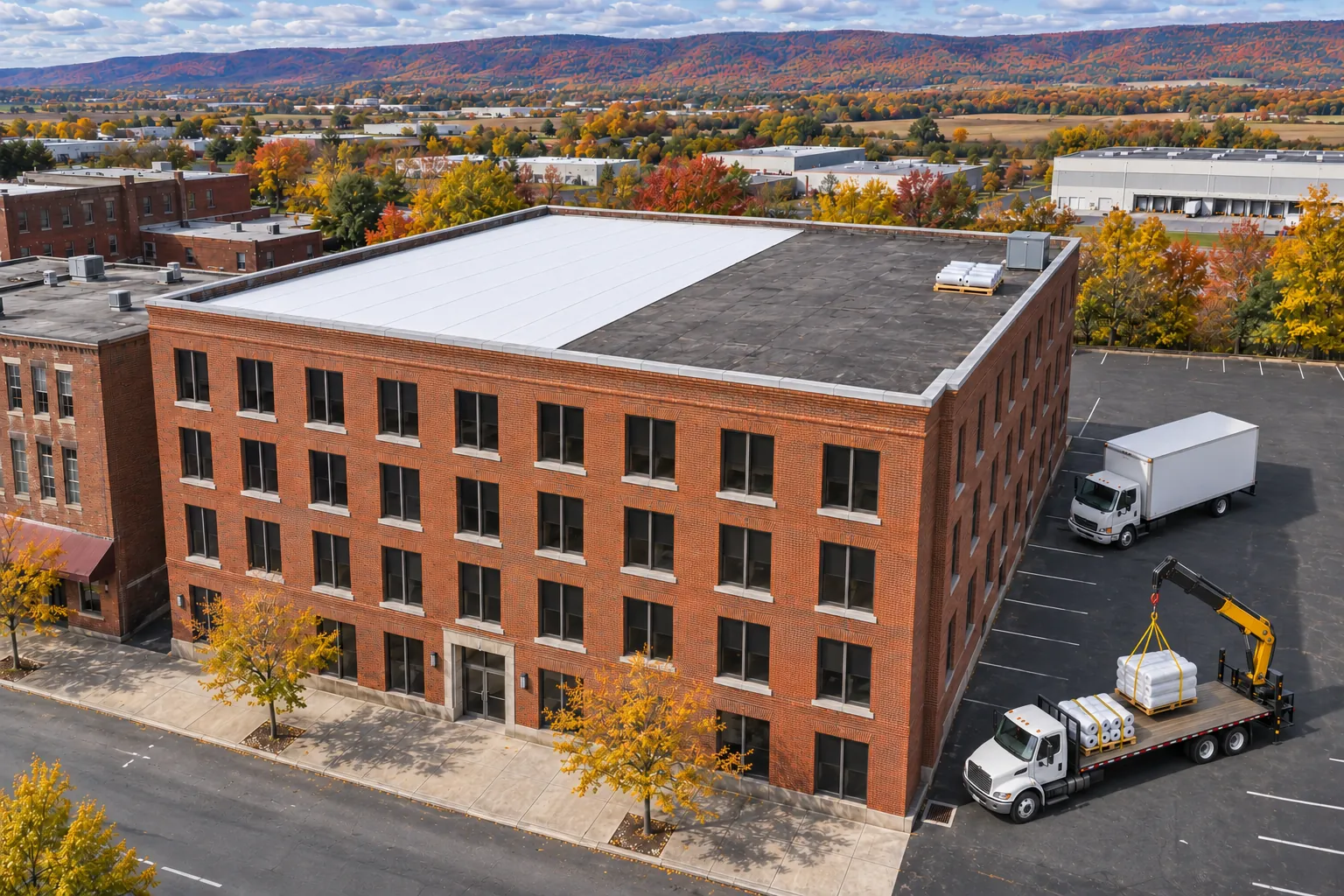
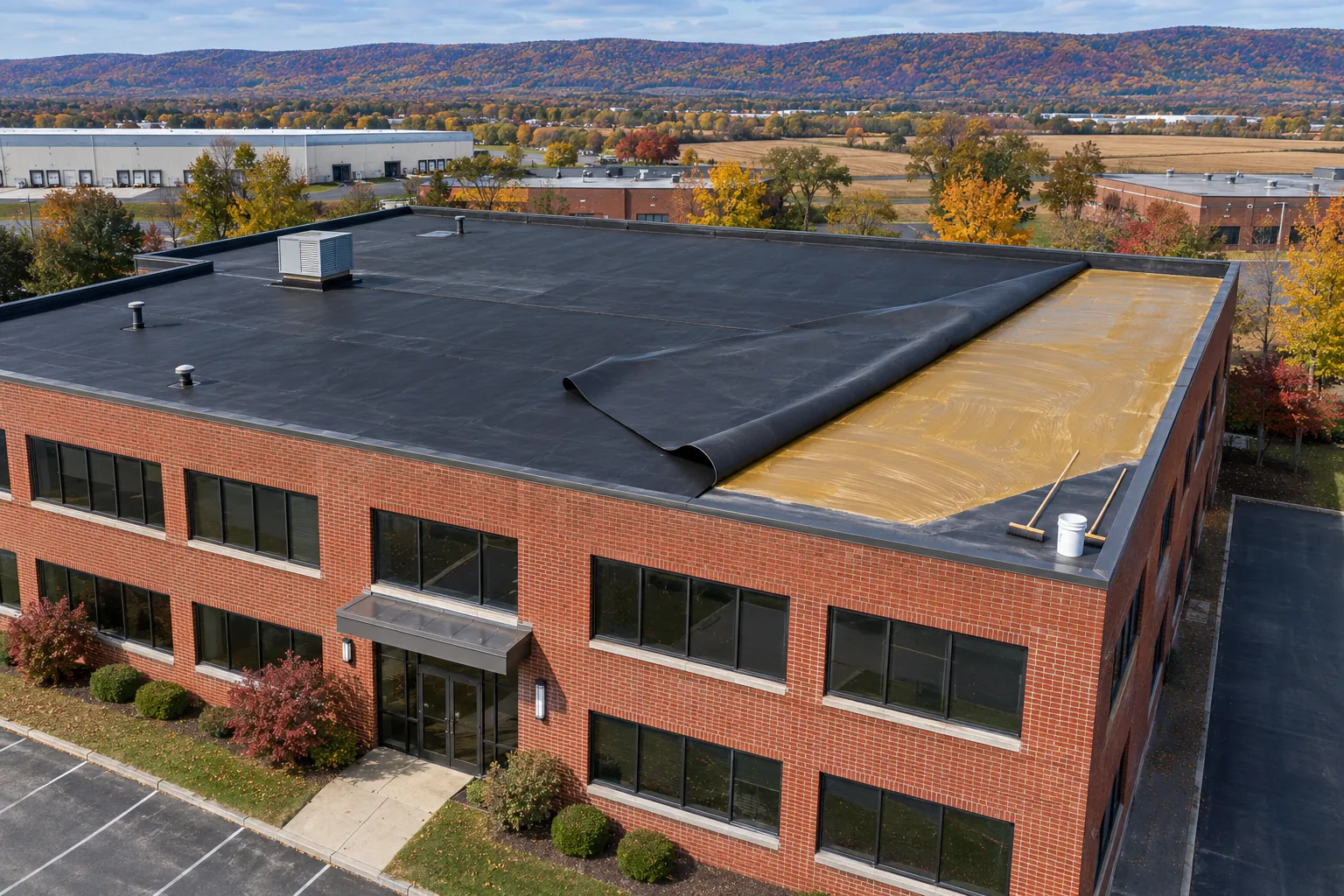
As a Harrisburg EPDM roofing contractor, we replace rubber roofs on offices and brick buildings, rebuilding terminations, pipe boots, and wall flashing along the way.

Harrisburg EPDM roofing work depends on what sits under the rubber. The inspection sorts roofs into repair, recover, or full replacement.
| Roof Condition | Repair | Recover Over Existing | Tear-Off And Replace |
|---|---|---|---|
| Shrinking membrane pulling at parapet walls | Sometimes | Rarely | Usually Fits |
| Leaks at abandoned pipe penetrations | Usually Fits | Rarely | Rarely |
| Ballast roof with dry insulation and a firm deck | Sometimes | Sometimes | Usually Fits |
| Wet insulation under older seams | Rarely | Rarely | Usually Fits |
| Split laps across many roof levels | Sometimes | Rarely | Usually Fits |
Rubber roofs fail at edges, laps, and old openings long before the field wears out. These are the spots we check on every EPDM roof.
Each rubber roof is built from choices about attachment, insulation, and flashing. These are the ones we settle with the owner before work starts.
| Decision | Common Path | What Changes It |
|---|---|---|
| Attachment | Fully adhered sheet | Ballasted when the structure carries stone and the maintenance plan allows it |
| Existing insulation | Kept only after moisture testing | Removed where cores show wet or loose boards |
| Seams | Factory-applied or field seam tape | Wider laps at high-traffic areas |
| Pipes and vents | Unused openings removed and decked over | New boots where the pipe stays in service |
| Wall transitions | New termination bar and counterflashing | Wall repairs where water gets behind the flashing |
A rubber roof replacement gives an older building a clean start at its walls, openings, and levels, where most leaks began.

Multi-level offices have walls everywhere: between roof levels, around stair towers, and along parapets. Each one needs a termination the crew can install well and a maintenance tech can inspect later.
During replacement we pull old flashing, look at the brick and coping behind it, and set new termination bars and counterflashing.
Pipes left from old equipment come out and the deck is closed, removing leak points nobody needs.
Adhered sheets drop the stone load and expose the roof for inspection. Ballast suits some structures and plans.
Boards stay only after moisture tests, so the replacement starts on a dry, firmly attached base.
We trace the leak, test the insulation around it, and price either a targeted repair or a full EPDM replacement.
Get A Free EstimateHarrisburg EPDM roofing replacement moves level by level, so each part of the building stays dry while the next section opens.

We check laps, terminations, and pipe boots on every level, take moisture cores, and note which pipes and vents are still in service.
Insulation, curbs, and penetrations each get a keep, repair, or remove call, written into the scope before tear-off begins.
Crews strip one level or section at a time, fix the deck, set insulation, and adhere or ballast new membrane before the day ends.
New termination bars, counterflashing, pipe boots, and drain flashing go in, with lower roofs protected from upper-roof runoff.
Laps, edges, and wall details get a last check with the building manager, and any concealed findings are reviewed together.
An EPDM roof sits beside other systems on many properties. These services cover the rest of the building.

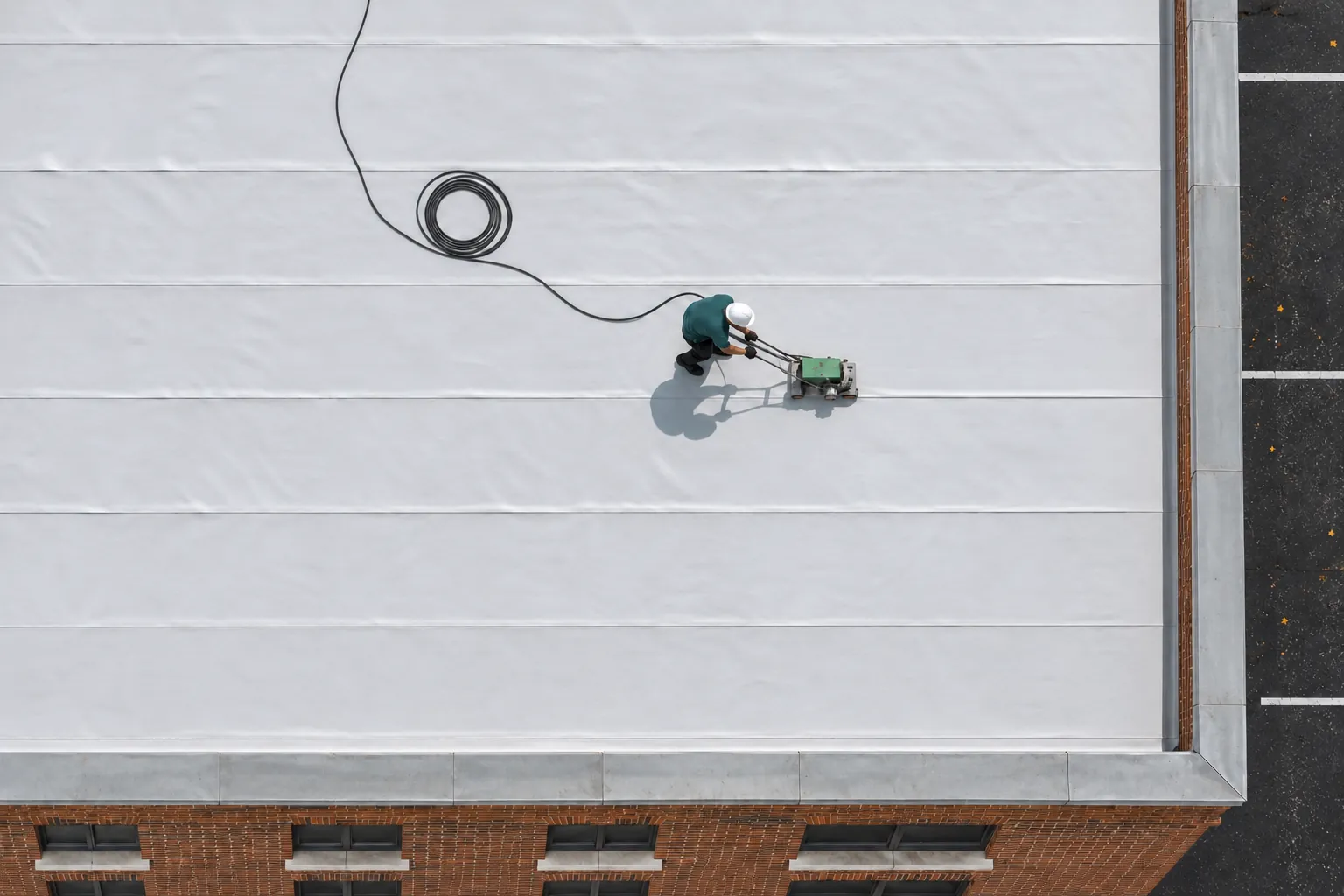
White welded membrane fits warehouses and offices where summer heat and heavy equipment traffic shape the roof plan.
See TPO roofing
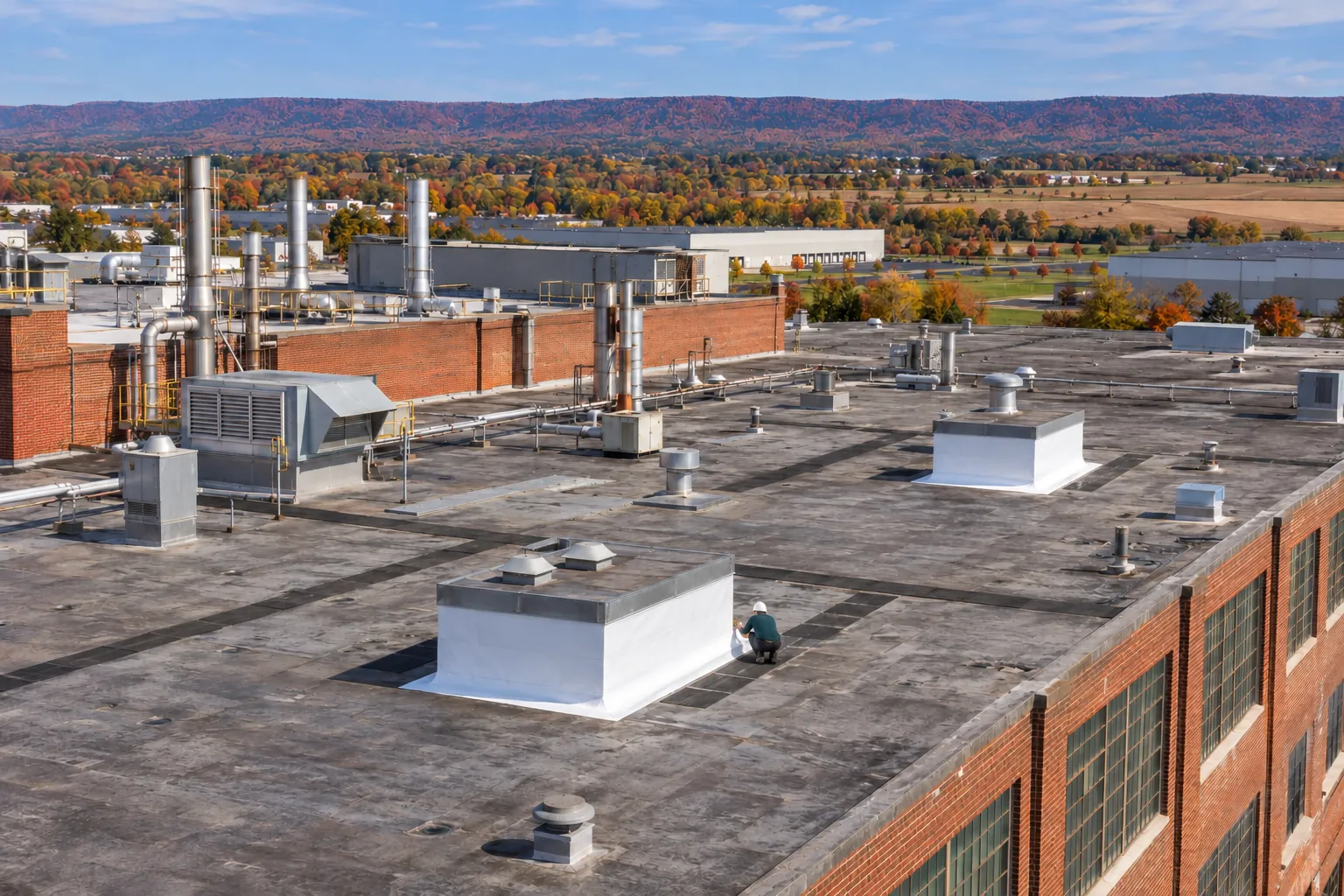
Big plant roofs get divided into work zones, each scheduled around shipping, production, and the equipment above.
See industrial roofing
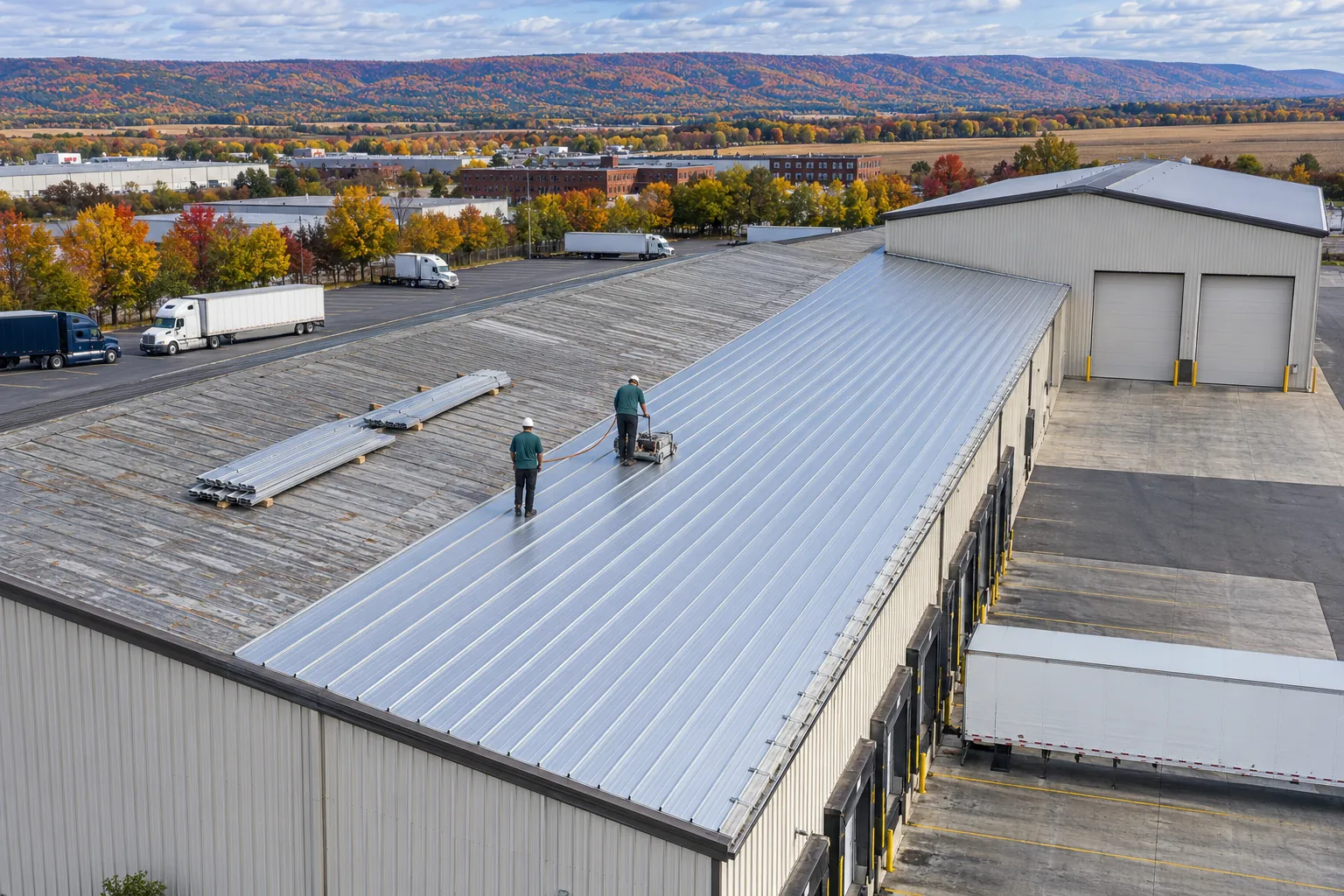
Steel panel roofs on shops and storage buildings are installed with movement details and curb flashing planned ahead.
See commercial metal roofingEPDM is a synthetic rubber membrane, usually black, laid in wide sheets over insulation. Seams are joined with tape or adhesive, and the sheet is held down by adhesive, fasteners, or ballast stone. It stays flexible in cold weather, which helps on older Harrisburg buildings with many walls and roof levels.
It can be a good fit when every transition is detailed well. We inspect each level and the walls and equipment between them, then plan terminations, seams, and splash protection where upper roofs drain onto lower ones. Those details matter more than the rubber itself.
Old flashing breaks down, and patched closures come unbonded. We check how the pipe is supported and whether it can come out of the roof entirely. Removing an unused opening and closing the deck leaves one less detail to maintain; a pipe that stays gets a new, serviceable boot.
Choose adhered when the building or maintenance plan works better without loose stone. We weigh the structure, substrate condition, attachment needs, and access for future repairs. Both systems need matching details at edges and openings, so the full design drives the call.
Only after testing. Dry-looking boards can still hold moisture or sit loose on the deck, so we take cores and check attachment and compatibility with the new assembly. The scope should also explain how areas found wet after the old membrane comes off will be handled and priced.
Time depends on roof size, the number of levels, deck repairs, and weather. We size each section so it can be stripped and closed before crews leave, which keeps offices below in use. The proposal lists the work order level by level so tenants know when crews will be overhead.
Tell us which levels leak and what you see at the walls. We will inspect the rubber roof and send a written repair or replacement scope.