Moisture
Open Mortar Joints Above the Flashing
- You See
- Gaps and crumbling mortar in the brick just above the roof line.
- What It Means
- Water enters the wall and runs down behind the flashing. Repointing belongs in the scope with the roof.

As a Camp Hill commercial roofing contractor, we replace flat roofs on brick and block buildings and rebuild the flashing where each roof meets masonry.
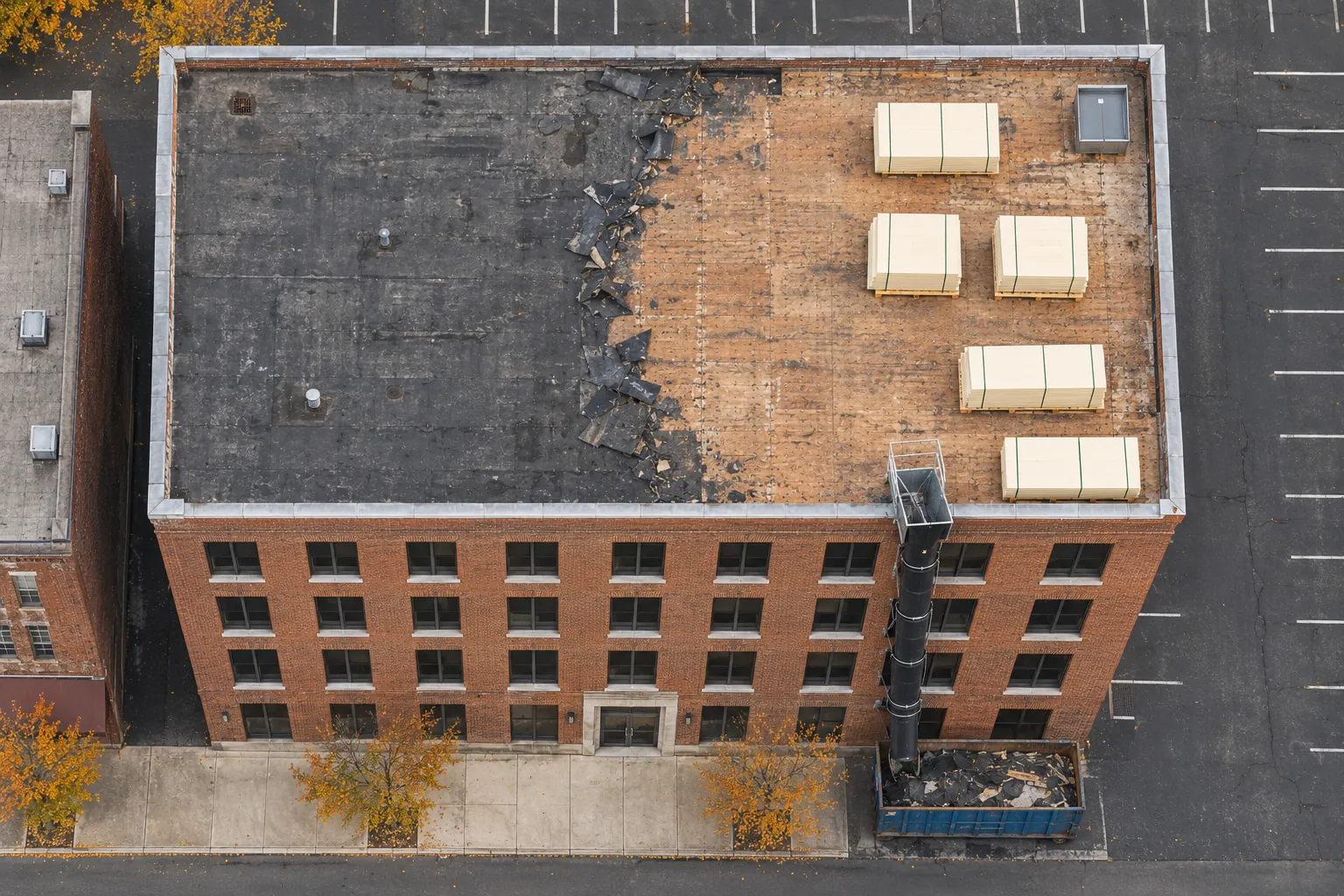
Camp Hill commercial roofing on masonry buildings depends on the joint between roof and wall, where water often gets in from above the flashing.
A leak beside a wall can start at the membrane, the termination, the counterflashing, or the brick and coping above. We inspect all of them together and look for paths that let water travel behind the roof detail.
When the masonry above is part of the problem, the scope names it, so a new roof is never installed beside an open source of interior moisture.
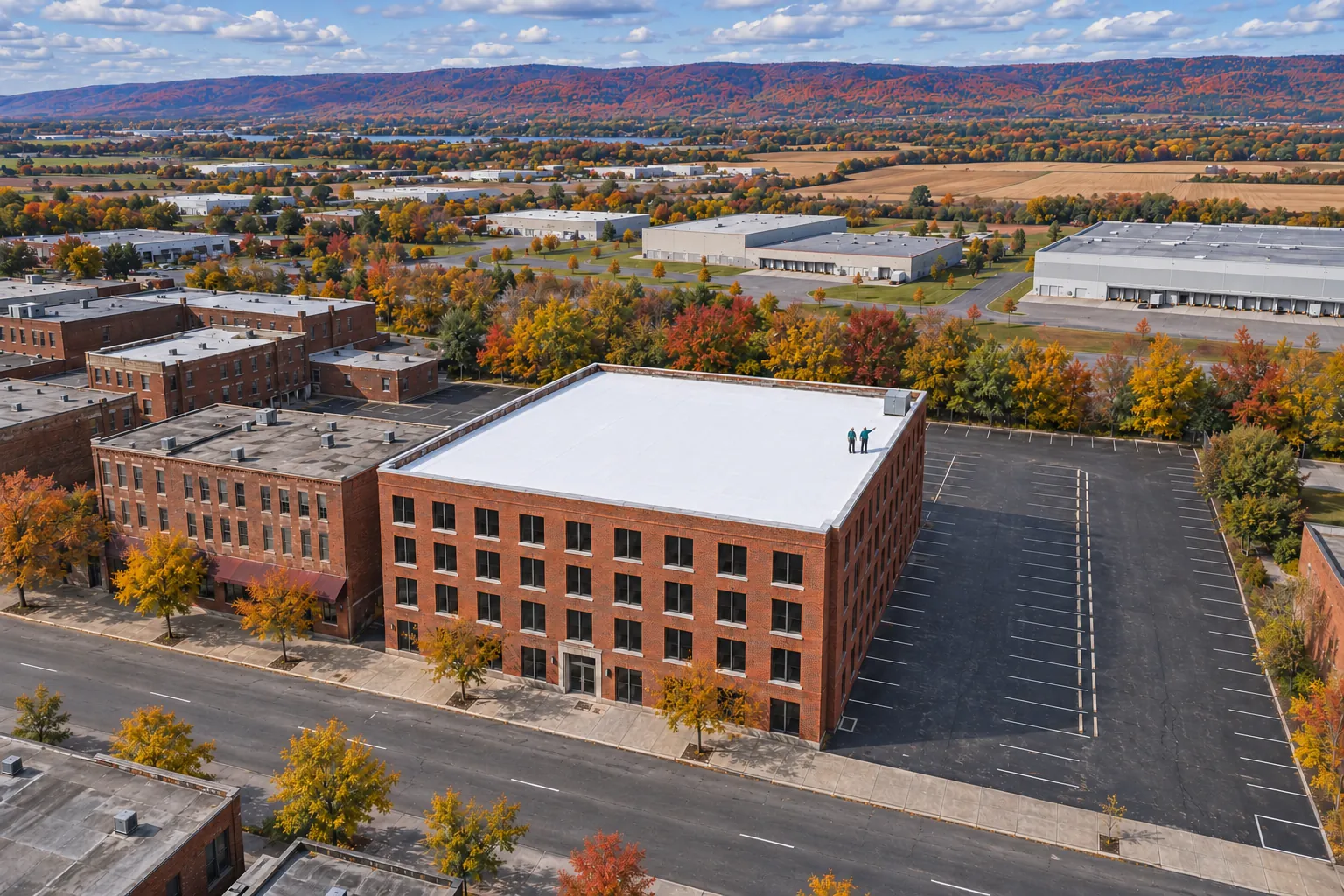
These conditions show up where flat roofs meet masonry.
Treating the roof and wall together stops repeat leaks that a membrane alone leaves behind.
When the roof is replaced and the wall above is left open, water keeps entering behind the new flashing and the leak returns. Including masonry repairs in the same scope closes that path.
We note mortar joints, coping, and through-wall flashing during inspection and coordinate masonry work so it is done before the new counterflashing goes on.
Flashing height, coping repair, and repointing are priced as separate lines beside the membrane.
Many storefronts and offices share brick party walls, and each one needs its own flashing plan.
Water tests at the wall separate roof leaks from masonry leaks before money is spent.
Every system needs a proper wall detail; how that detail is built depends on the membrane or panel.
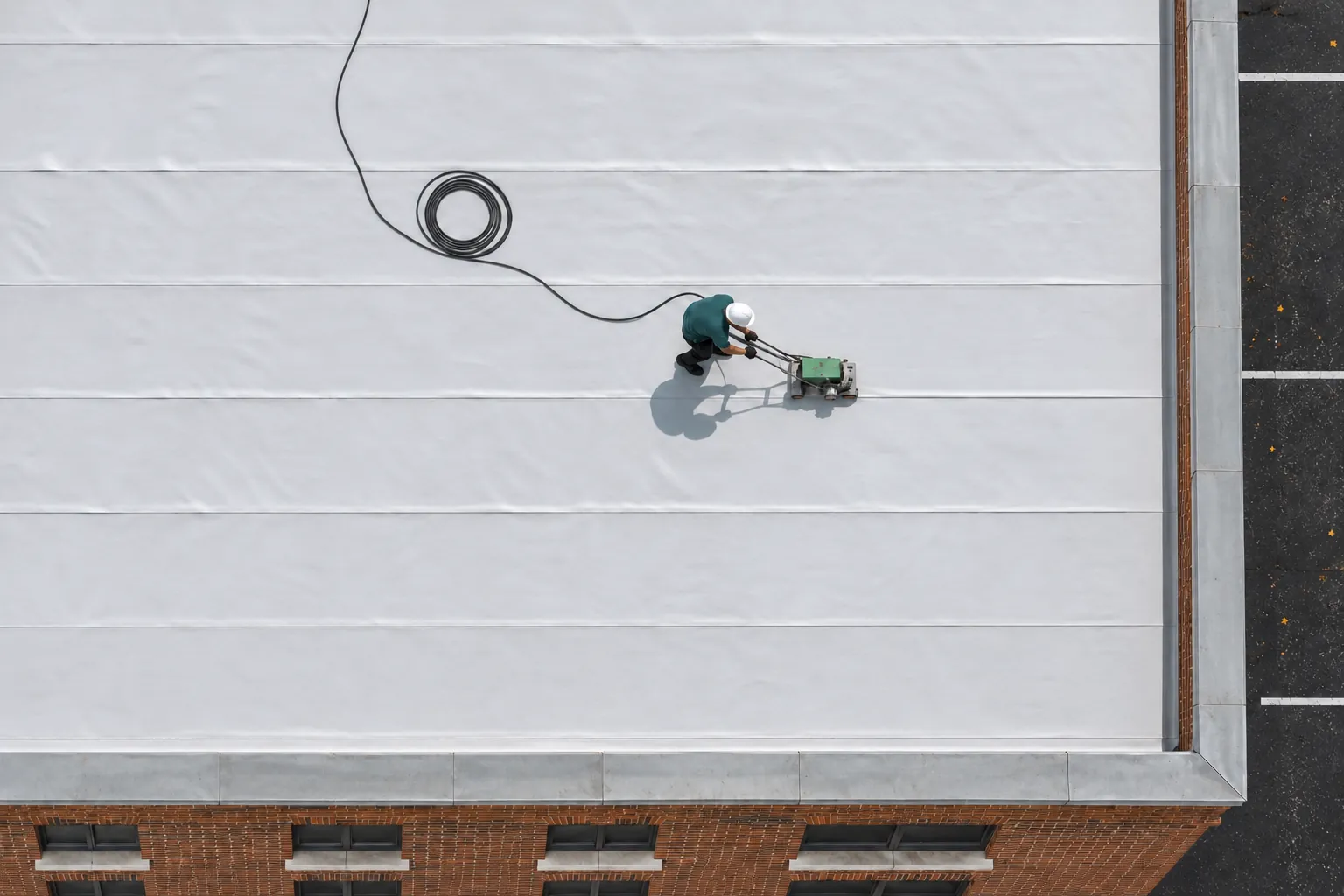
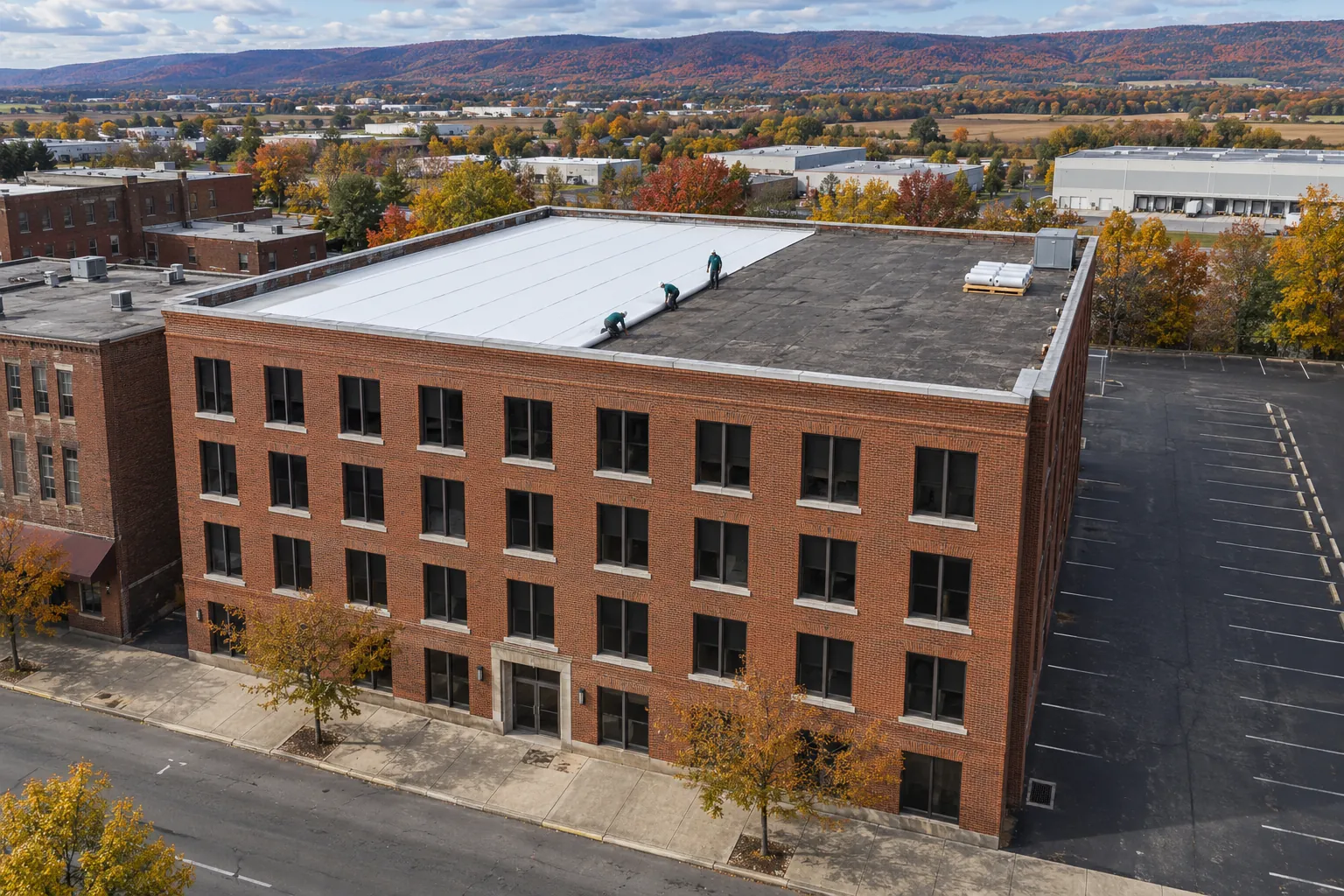
Welded white membrane on Camp Hill offices, carried up each wall and finished under new metal counterflashing.
Camp Hill TPO roofing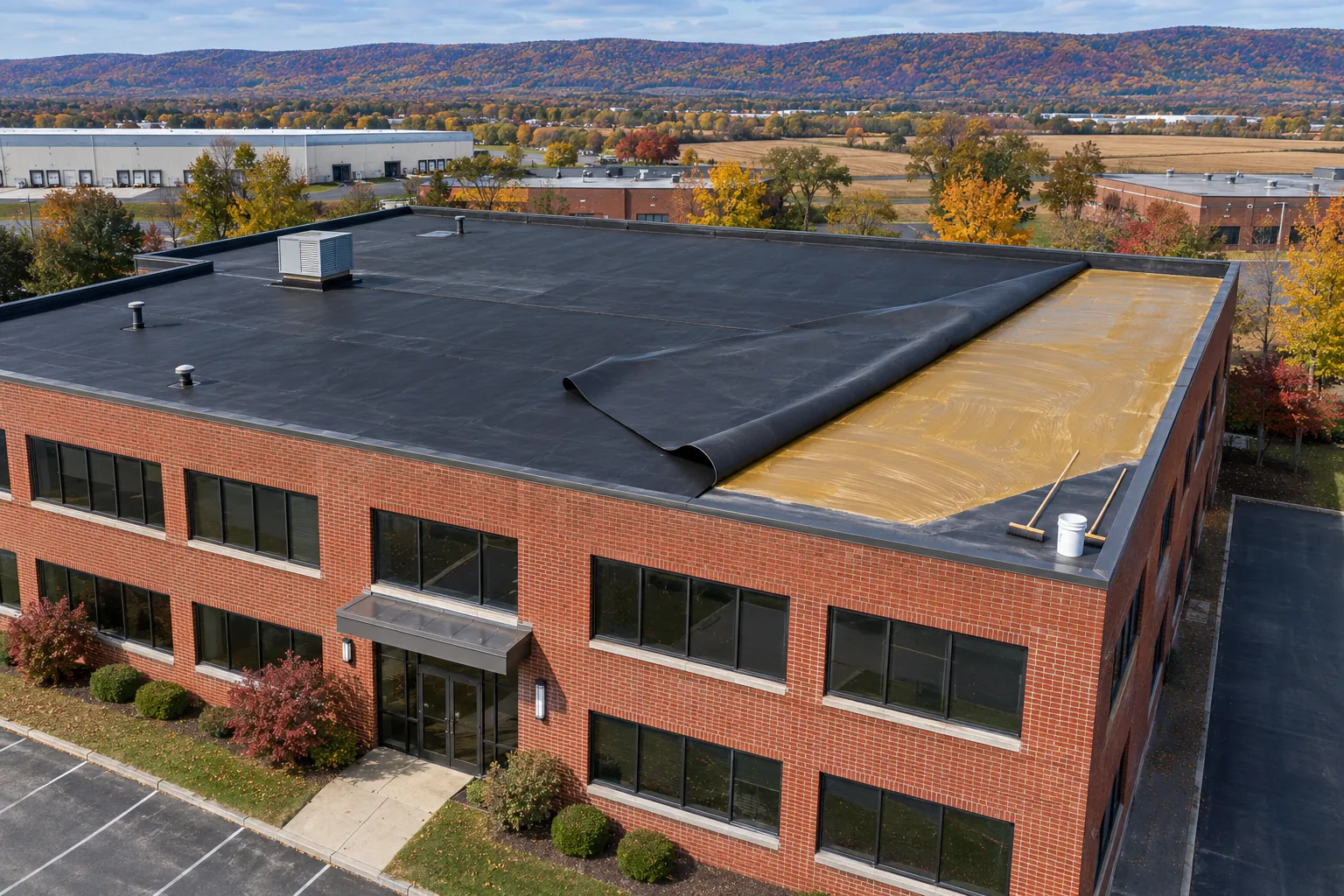
Rubber membrane that flexes at older brick walls, with termination bars set into repaired mortar.
Camp Hill EPDM roofing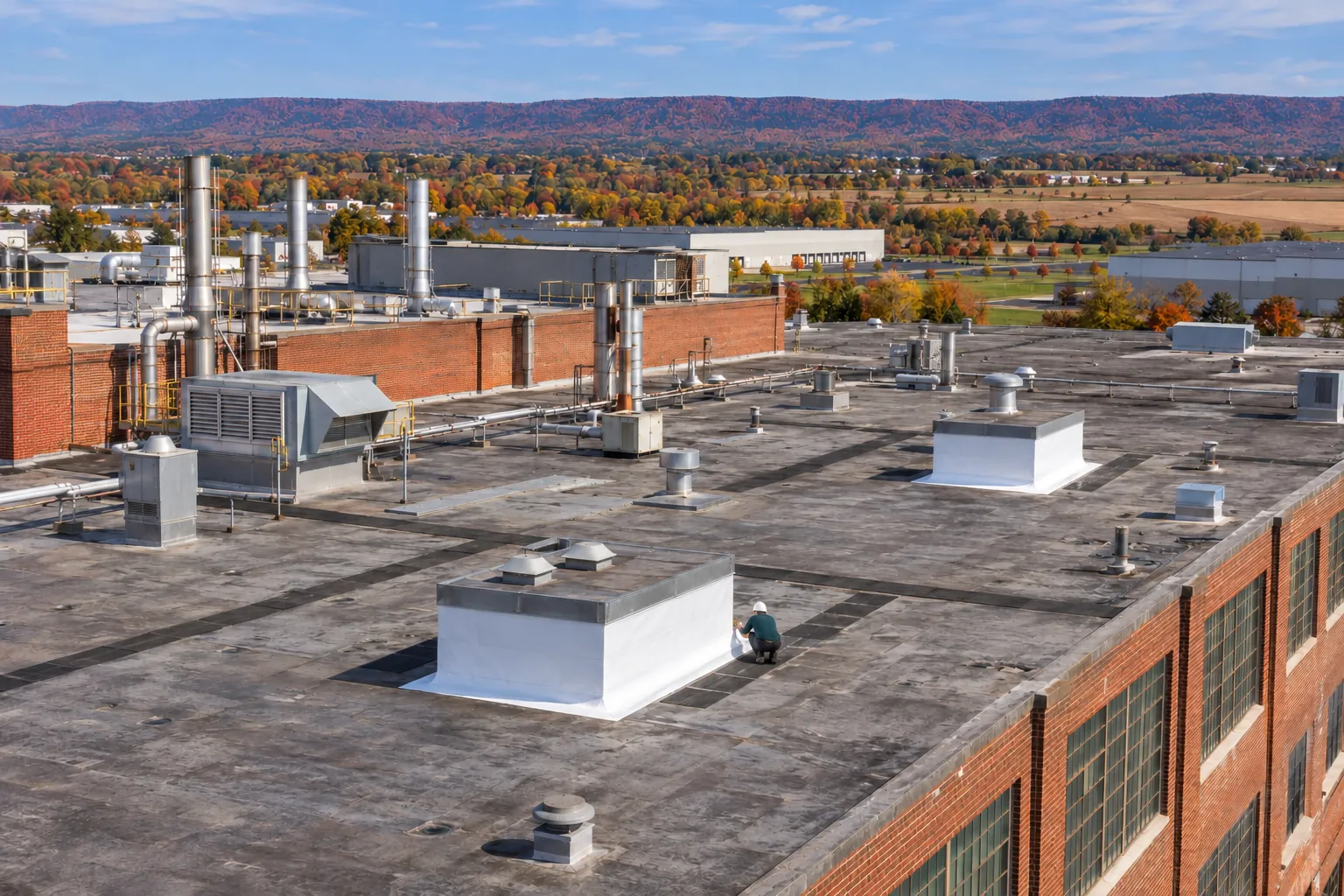
Larger masonry plant buildings where long parapet runs and equipment both need attention during the reroof.
Camp Hill industrial roofing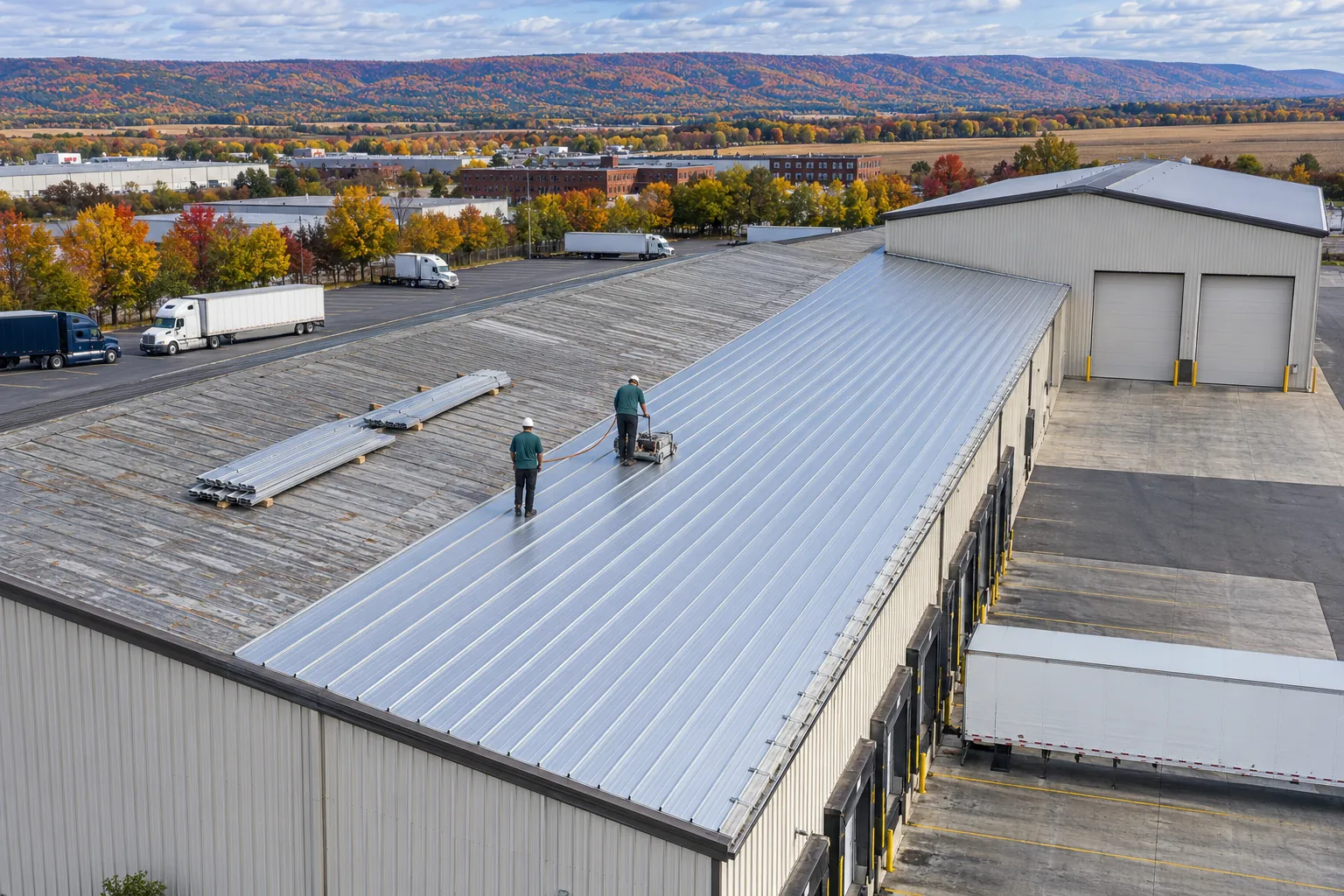
Panel roofs that meet block walls, with headwall and sidewall flashing planned for thermal movement.
Camp Hill metal roofingWe inspect the roof edge, the flashing, and the masonry above it, then price the fix that closes every path water is using.
Get A Free EstimateWall work and roof work follow one sequence so each trade finishes before the next detail covers it.
We check the membrane, flashing, terminations, and the masonry and coping above, and water-test suspected wall leaks.
Repointing, coping repair, and through-wall flashing are scheduled with the mason before roof flashing is closed.
Old roofing comes off by section, the deck is repaired, and new insulation and membrane go down.
New termination bars, base flashing, and counterflashing are installed and checked along every wall.
We install and replace commercial roofs across the towns below too. Located outside them? You can call us or send us a message.
Office roofs protected while renovation trades work overhead.
Mechanicsburg commercial roofingFood warehouse roofs detailed around refrigeration curbs and piping.
Middletown commercial roofingHave the roof flashing, the terminations, and the masonry above them checked together. We look for routes that let water get behind the roof detail, including worn wall connections. Replacing only the membrane can leave the new roof next to an unresolved source of interior moisture.
Water testing helps. We wet the wall and the roof separately and watch for water inside. Stains that appear after wind-driven rain on one side often point to the masonry, while stains near drains or seams point to the roof.
Because water entering the wall above the flashing defeats the new roof. When mortar joints or coping are open, we list that repair in the scope so the owner sees the whole fix, even if a mason performs it.
It adds membrane, counterflashing, and labor at each wall, so yes, a little. Taller flashing keeps drifting snow and splashing water below the top of the detail, which is why we recommend it on walls that collect snow.
Yes, at the walls being flashed. The mason finishes repointing and coping first, then we install new counterflashing, so nobody disturbs completed work.
Usually. We work section by section, close each area daily, and keep hoisting away from entrances during business hours when the owner shares the schedule.
Tell us where the wall leaks show up. We will inspect the roof and masonry together and price the full repair.