Age
Patch History Nobody Recorded
- You See
- Mismatched patches and sealant with no repair records on file.
- What It Means
- Repairs made under different tenants often go undocumented. The inspection rebuilds that history from the roof itself.
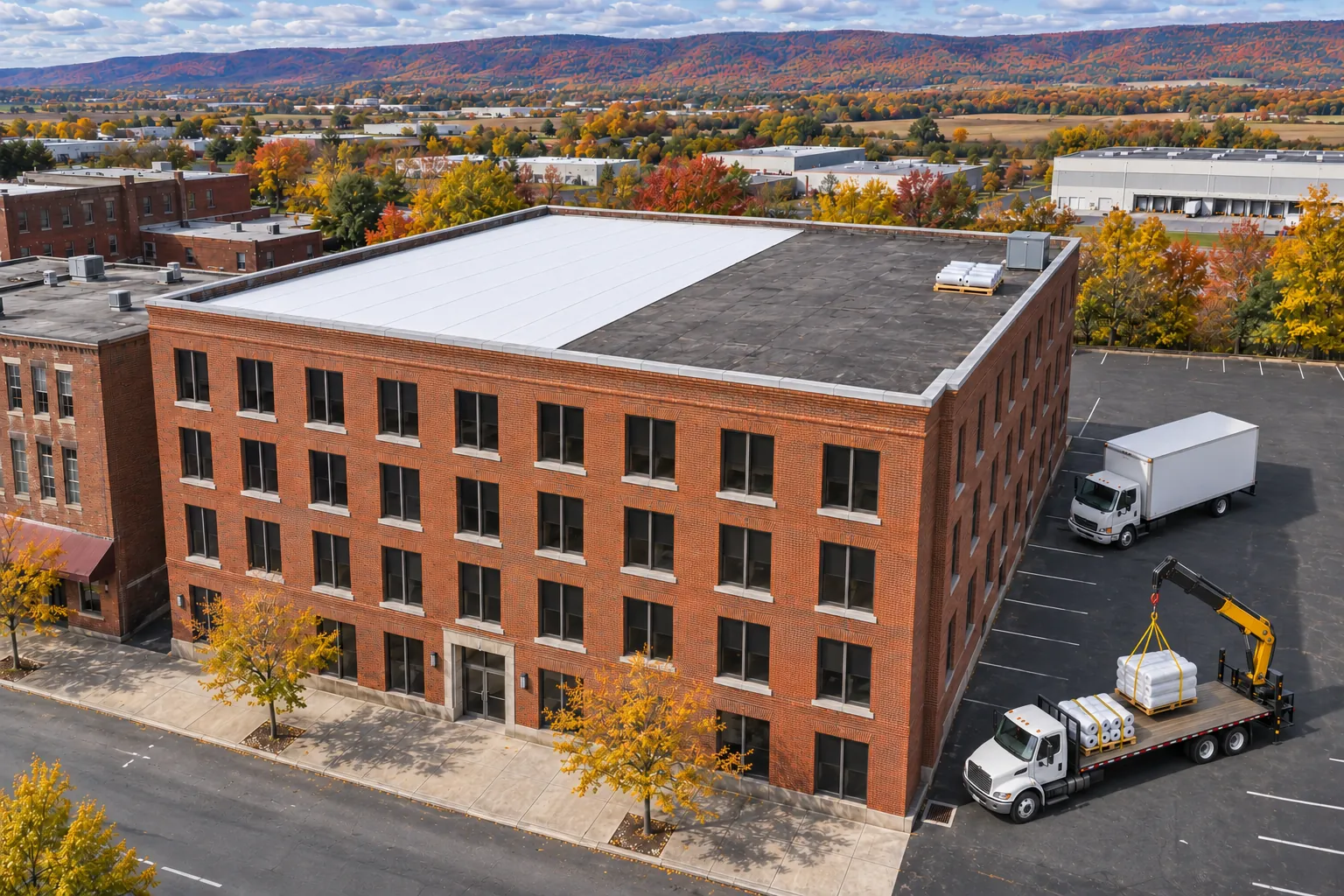
As a New Cumberland commercial roofing contractor, we replace roofs on leased commercial buildings and can time the work with a tenant change when the roof allows.
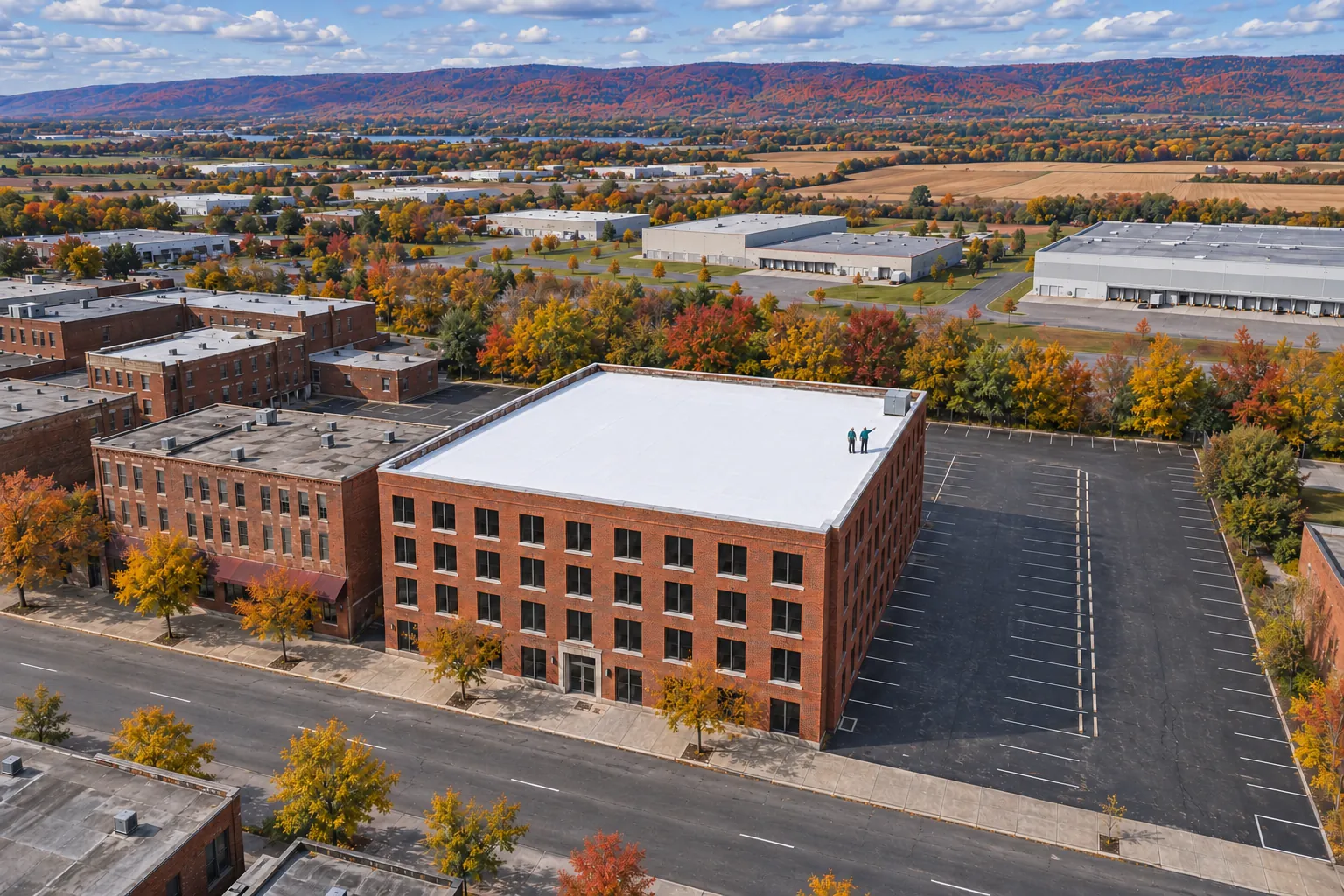
New Cumberland commercial roofing on leased buildings is easier when the space below is empty, so owners often line a reroof up with a tenant change.
A vacant space makes interior protection and access simpler: no inventory to cover, no customers at the door, and more freedom with noisy tear-off. We still inspect the roof and set a weather plan before fixing the work order.
Lease terms decide who pays for what. Owners and tenants should review their agreement while the roof scope is being written.
Rental buildings collect roof problems that nobody owned during the last lease.
A vacancy window takes several hard parts out of a reroof.
With the space vacant, interior protection is quicker, noisy tear-off bothers nobody, and access for hoisting is easier. The next tenant moves in under a new roof with fresh records.
When the vacancy is short, we size sections and crews to fit the window and plan the rest of the job around the incoming tenant.
A written price helps owners decide how roof costs fit the next lease.
Fans, mounts, and curbs left from the last occupant come out and the deck is closed.
Install details, warranty paperwork, and a roof plan go to the owner for future tenants.
Any of these systems can be installed during a vacancy; the choice follows the building, the inspection, and the owner plans.

Welded white membrane for New Cumberland retail and office rentals, installed while the space below is between tenants.
TPO roofing for rentals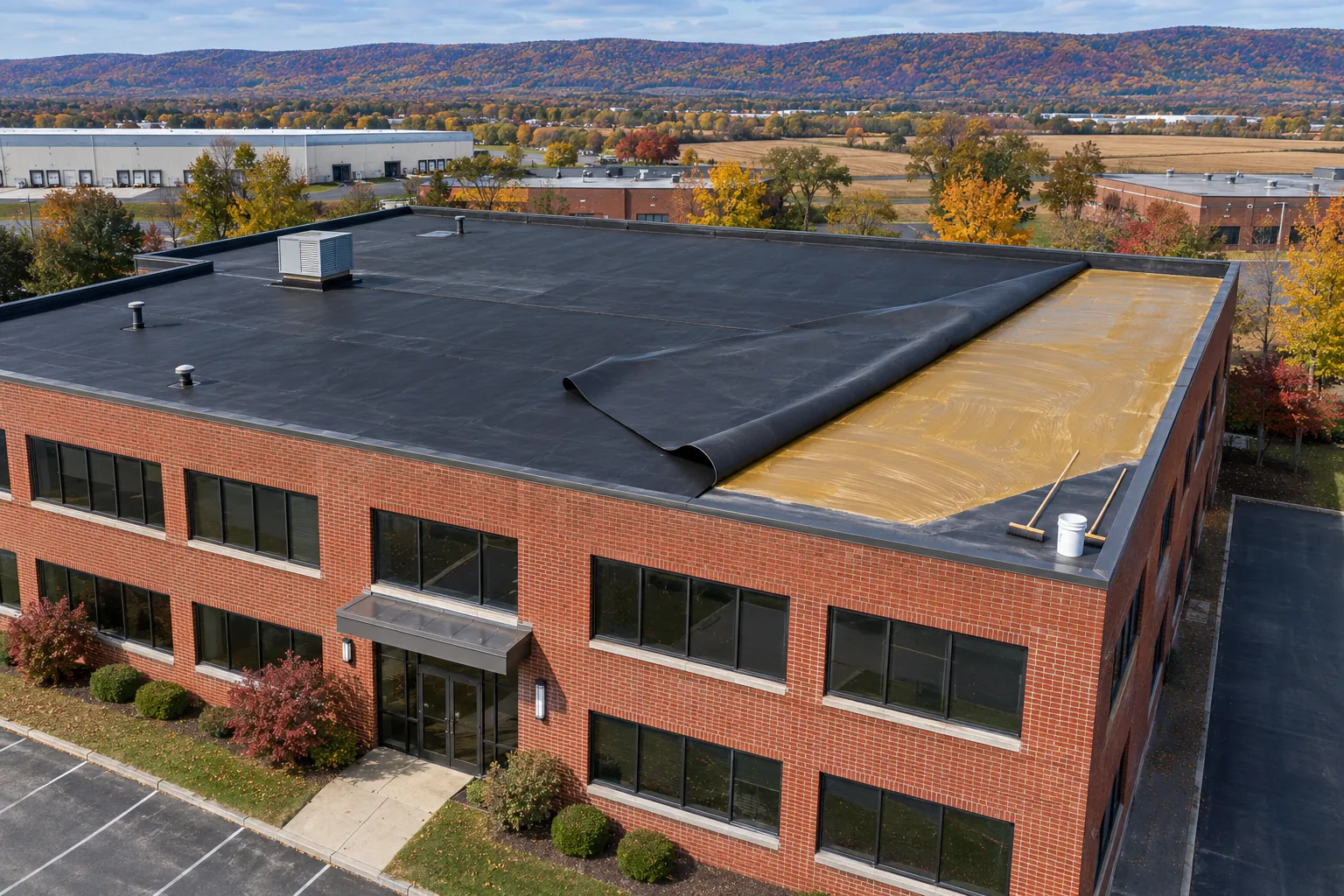
Rubber roofs on older leased buildings, where the vacancy gives room to rebuild wall flashing and close old pipes.
EPDM roofing for rentals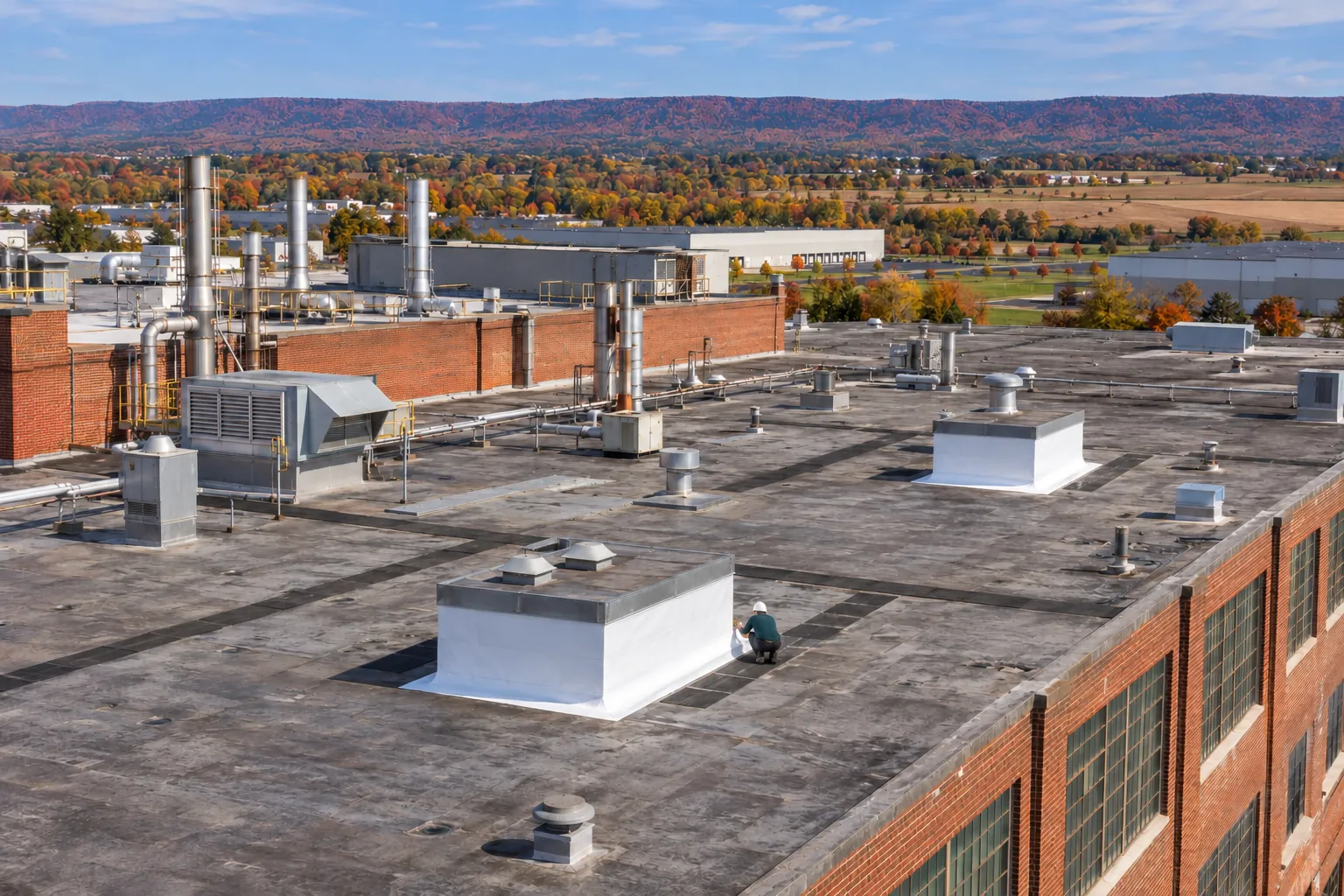
Warehouse and flex buildings replaced in zones when one tenant leaves and another prepares to move in.
Industrial roofing for rentals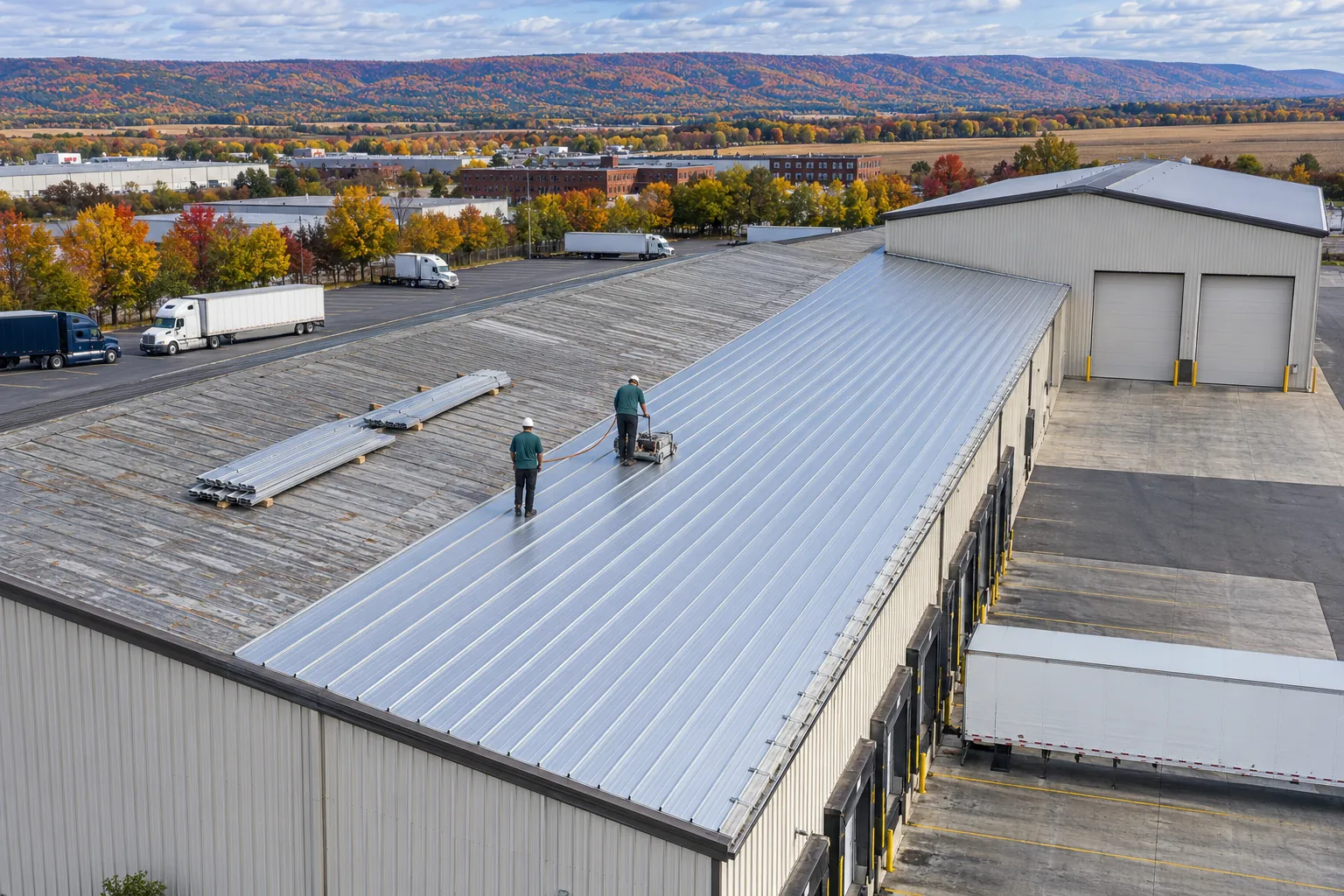
Panel roofs on leased shops and storage, with leftover openings from past tenants closed during the work.
Metal roofing for rentalsBook an inspection now and we will tell you whether the roof work fits the vacancy and what it will cost.
Get A Free EstimateThe vacancy sets the calendar; the roof sets the scope.
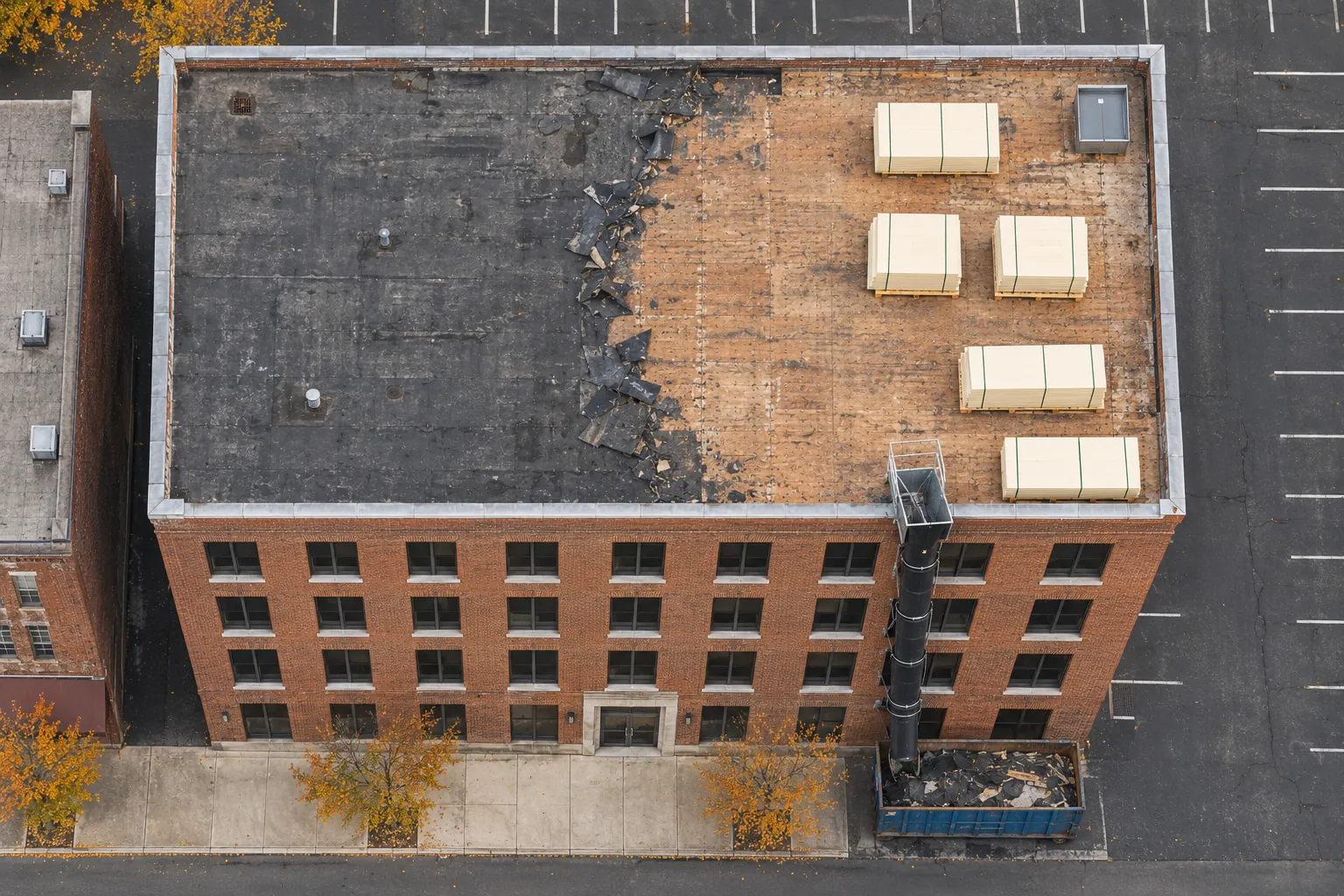
We check the membrane, drains, insulation, and leftover equipment, ideally before the old tenant leaves.
Sections, crew size, and a weather plan are set to fit the vacancy, with a fallback if weather pushes dates.
Old equipment comes off, openings are closed, and the roof is replaced while the space is empty.
The owner receives the final scope, material details, and roof plan for the next lease.
Commercial roof work also takes us to the towns below. If the building is elsewhere, call us or send us a message.
Office roofs protected while renovation trades work overhead.
Mechanicsburg commercial roofingFood warehouse roofs detailed around refrigeration curbs and piping.
Middletown commercial roofingSometimes, and it can simplify interior protection and access. We still inspect the roof and set a weather plan before fixing the order of work. Lease terms decide who is responsible for what, so the owner and tenant should check their agreement while the roof scope is written.
We prioritize the sections over the vacant space and schedule the rest around the new tenant, with each section closed daily. The proposal shows which parts happen during the vacancy.
The lease decides. Some leases put roof replacement on the owner and maintenance on the tenant; others split costs differently. We give both parties a clear scope and price so they can apply their agreement.
Roof area, tear-off layers, deck repairs, insulation, flashing, and removal of leftover equipment make up most of it. Access and season also matter, so we price after the inspection.
Local scheduling makes it easier to inspect before move-out and to adjust when lease dates shift. A nearby contractor can also return for follow-up checks once the new tenant settles in.
Keep the final scope, material and system details, a roof plan showing curbs and drains, and any warranty paperwork from the manufacturer. Those records help with future leases, repairs, and the next roofing decision.
Tell us your lease dates and what you see on the roof. We will inspect and price the work to fit the vacancy.