Commercial Roofing In Harrisburg, PA

Harrisburg Commercial Roofing Contractor

Roof Replacement for Offices, Warehouses, and Food Plants

As a Harrisburg commercial roofing contractor, we install and replace TPO, EPDM, industrial, and metal roofs. Every job starts with a roof inspection.

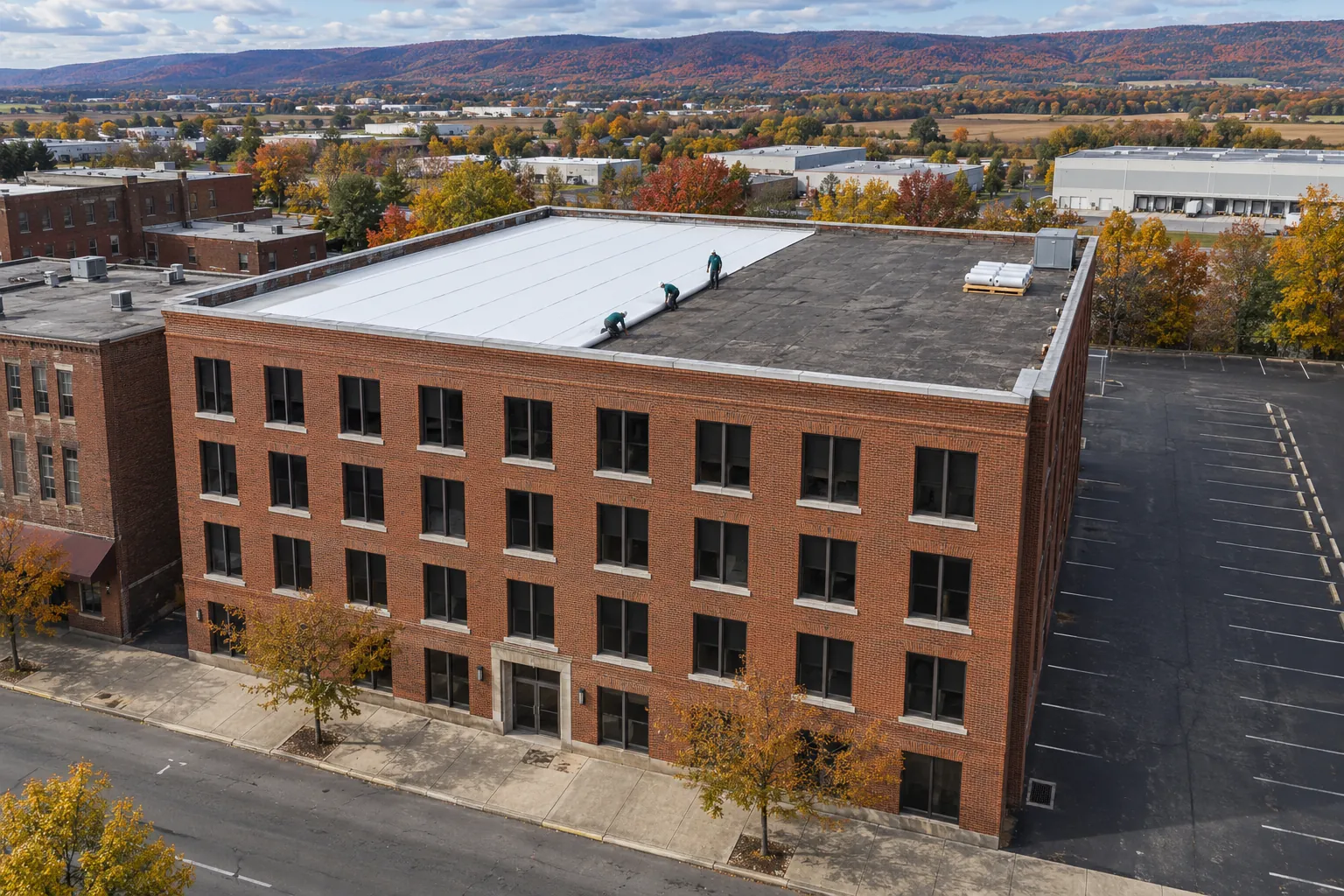
Drone view of a four-story brick office building with two roofers laying white TPO across half of its flat roof
  • First StepRoof Inspection Before Pricing
  • SystemsTPO, EPDM, And Metal Panels
  • BuildingsOffices, Warehouses, Plants
  • CoverageHarrisburg And Five Nearby Towns

Harrisburg Commercial Roofing Systems We Install

Harrisburg commercial roofing work covers four roof systems, each matched to the deck, slope, drainage, and rooftop equipment we find during inspection.

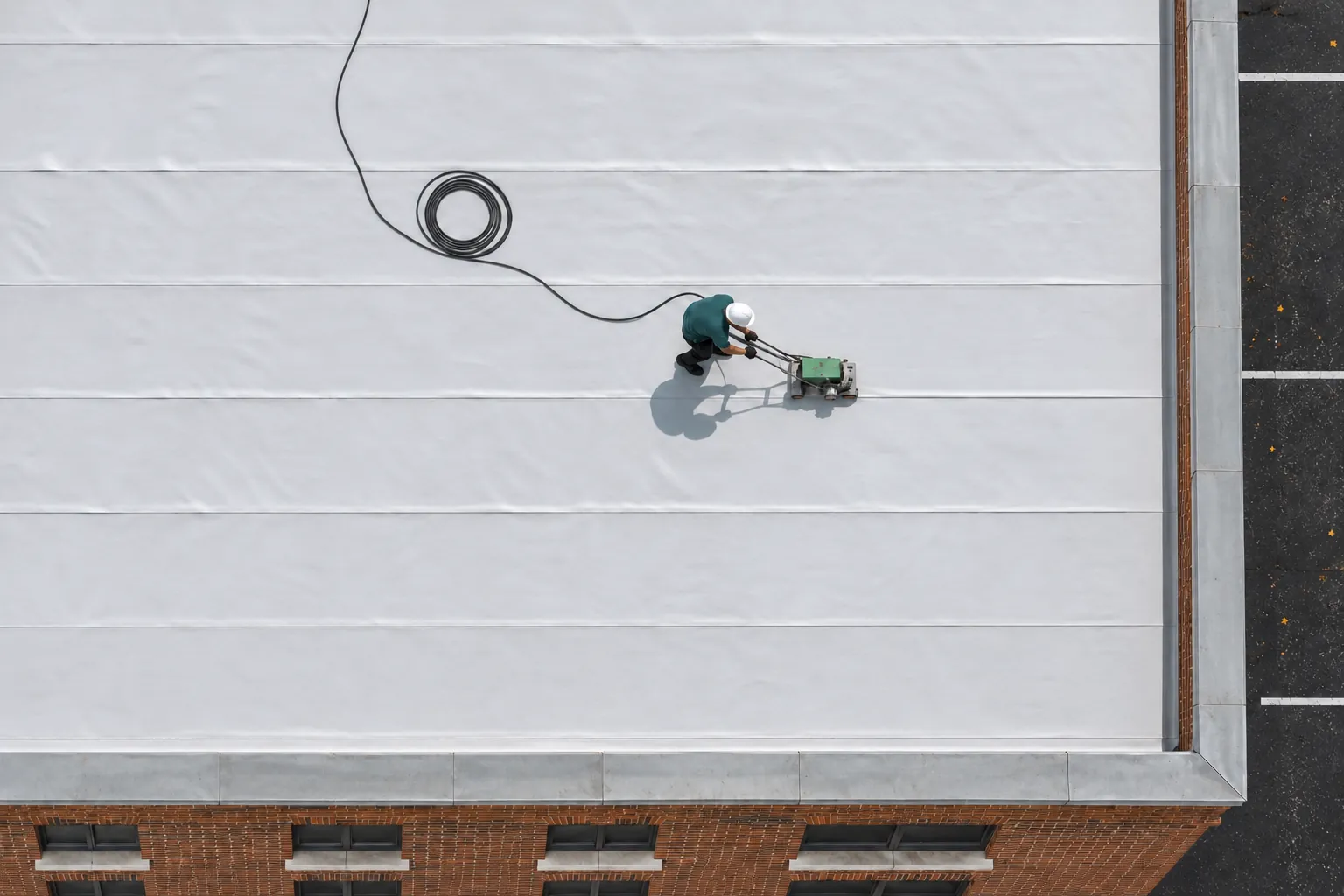
Top-down view of a roofer guiding a hot-air welder along a seam on a white TPO roof near the parapet

TPO Roofing

Slope
Flat to low slope
Seams
Hot-air welded
Common On
Offices, warehouses

White heat-welded membrane for offices and warehouses on low-slope decks. Walk routes and curb flashing are planned so busy service areas hold up under maintenance traffic.

TPO roofing in Harrisburg
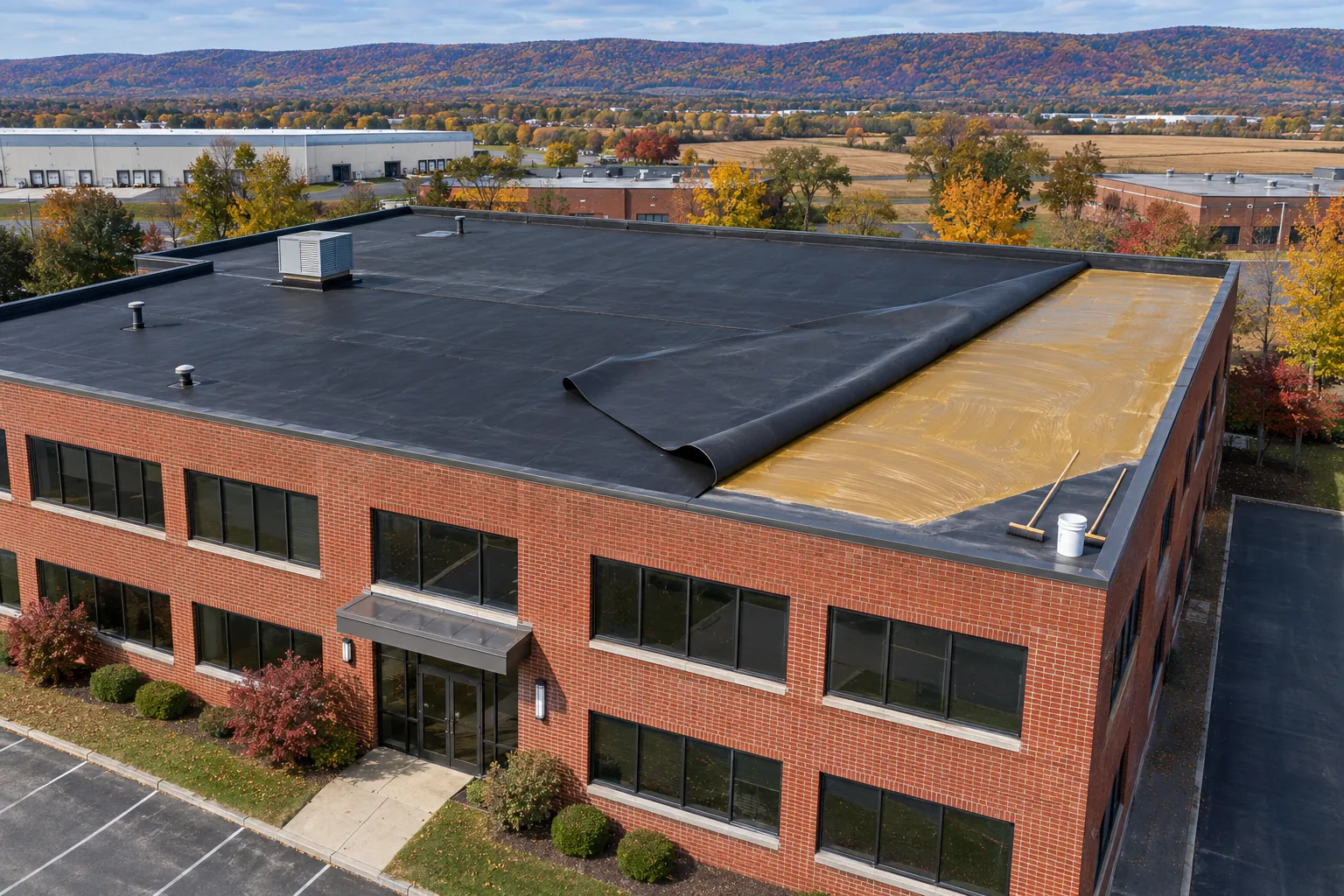
Black EPDM membrane being rolled out over fresh adhesive on a two-story brick office roof

EPDM Roofing

Slope
Flat to low slope
Seams
Taped or adhered laps
Common On
Multi-level offices

Black rubber membrane with flexible laps for roofs with several levels, parapets, and older brick walls. Abandoned pipes and worn terminations are closed or rebuilt.

EPDM roofing in Harrisburg
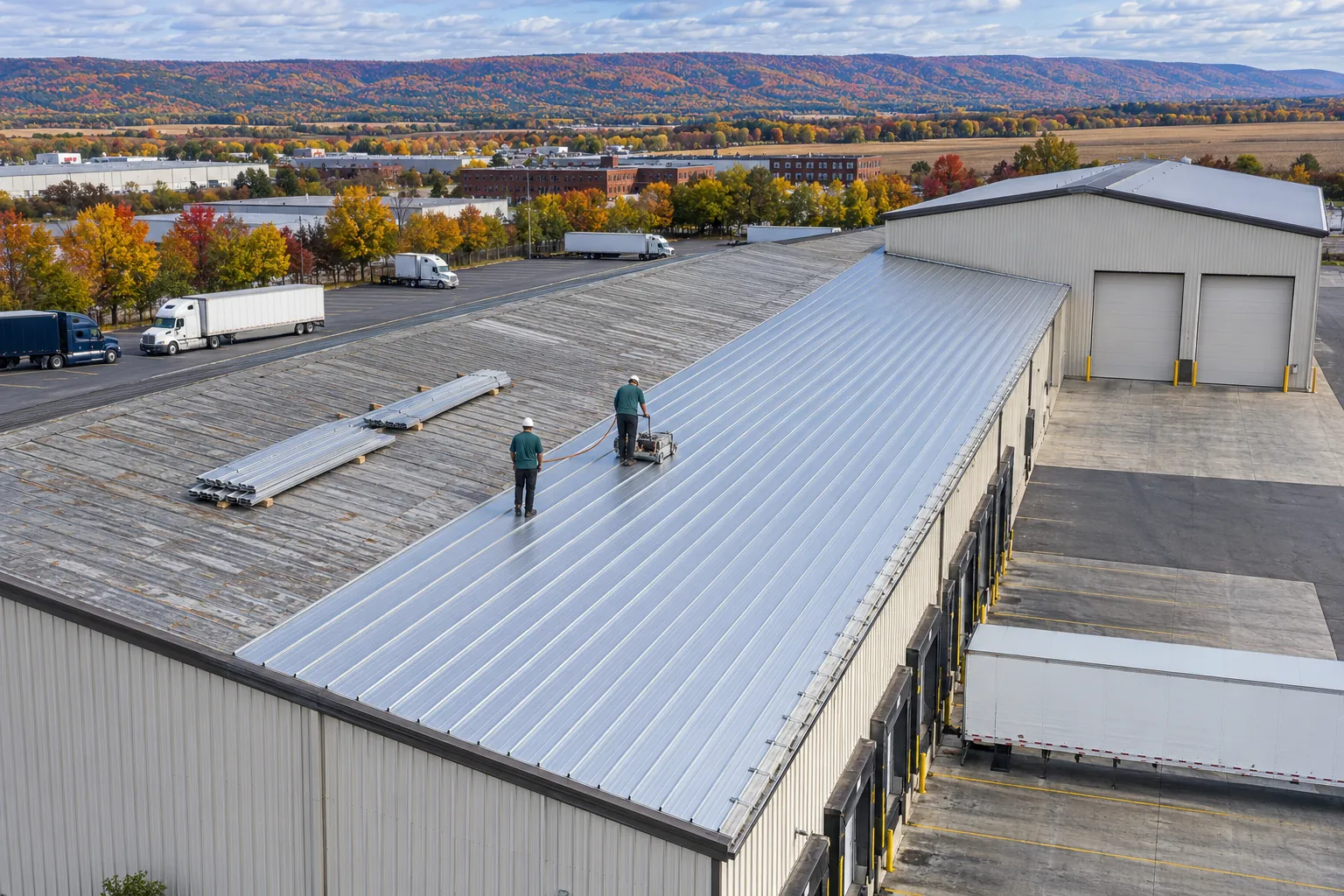
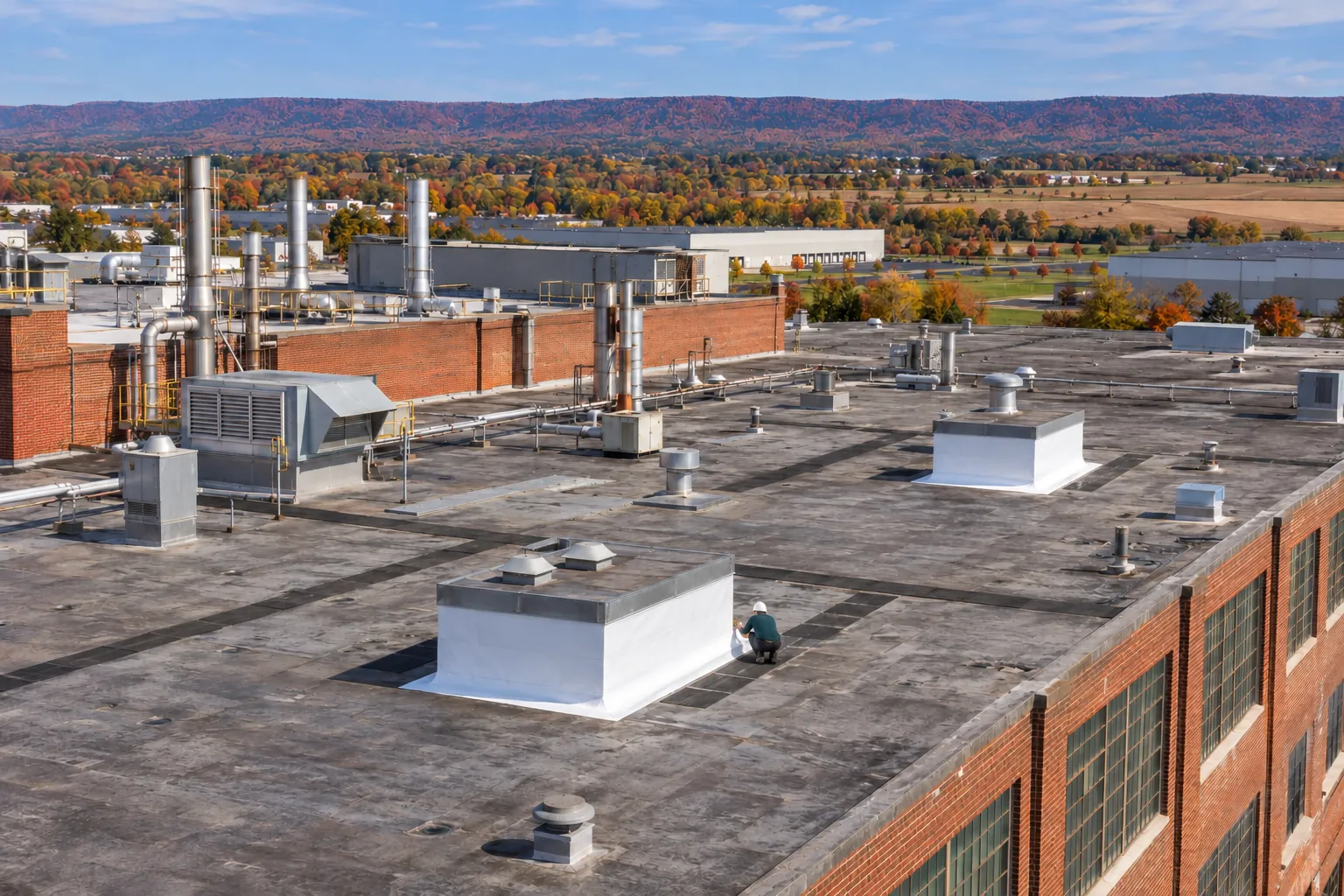
Industrial flat roof with exhaust stacks, ducts, and rooftop units, with a roofer working beside a unit curb

Industrial Roofing

Roof Area
Large, in sections
Key Detail
Equipment curbs
Common On
Plants, distribution

Large roofs over plants and distribution centers, replaced in sections so production, product protection, and truck traffic continue below each work zone.

Industrial roofing in Harrisburg

Why Commercial Roofing Work in Harrisburg Starts on the Roof

Good proposals come from good information. This is what an owner gets when the work begins with a full look at the existing assembly.

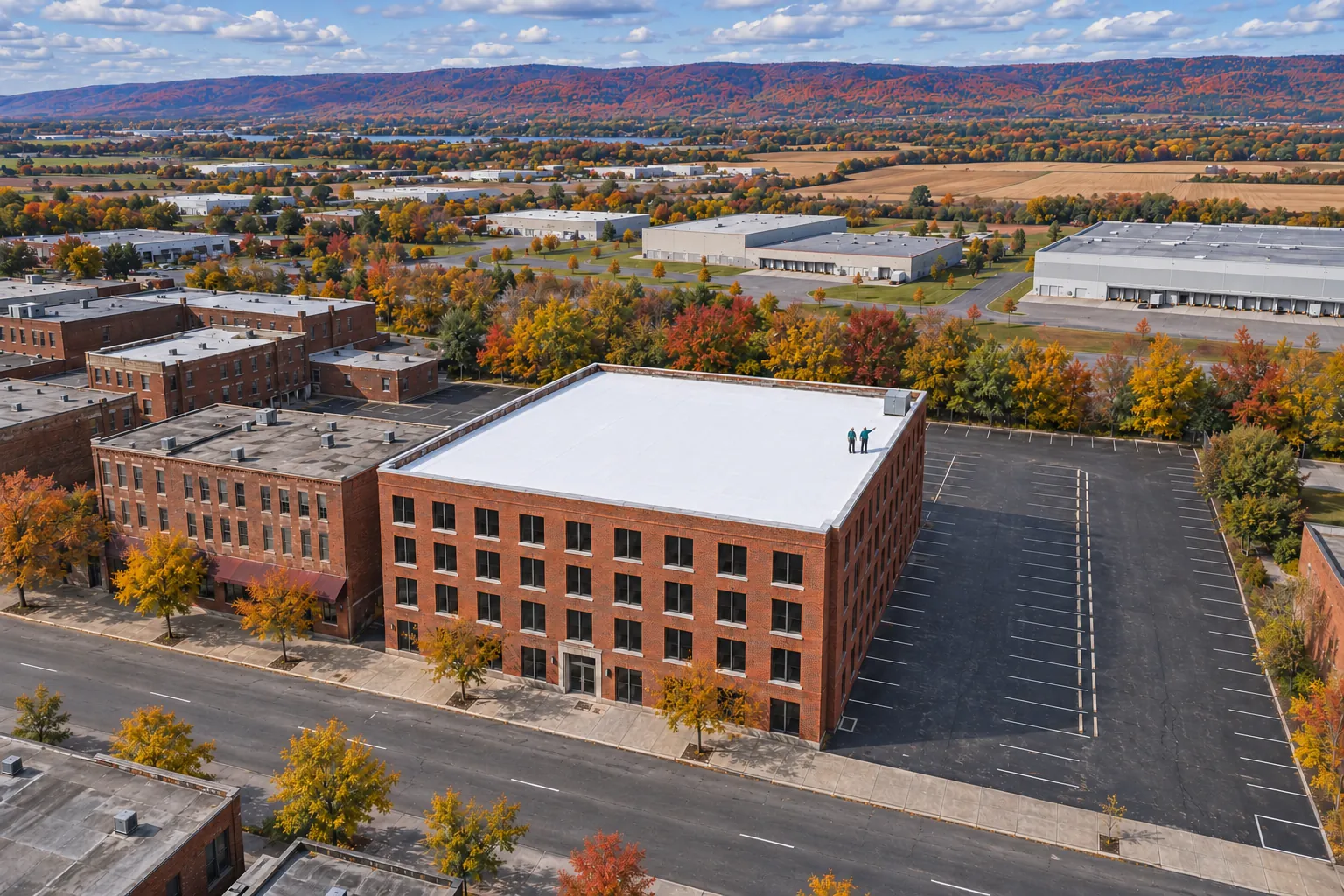
Brick commercial building with a new white roof among autumn trees, with warehouses and ridgelines behind

An Inspection Comes Before the Price

We measure the roof, cut test openings where moisture is suspected, and check the deck, insulation, drains, and edge metal before any number is written.

The proposal then names the system, the layers coming off, and the details at each curb, so two bids can be compared line by line.

Commercial Roof Replacement Cost Follows the Building

Area, tear-off layers, deck repair, insulation thickness, and the number of curbs set the price, along with access, staging, and season.

TPO vs EPDM for Commercial Buildings Starts at the Deck

Membrane choice comes after we know the deck, insulation, drainage, and equipment. Attachment and seam method are part of that decision.

Work Planned Around Tenants and Deliveries

Roof sections open one at a time and close against weather each day, so offices stay occupied and docks keep running.

Roof Conditions That Bring Harrisburg Owners to Us

Winters, heavy equipment, and older brick buildings leave recognizable marks on a commercial roof. These are the ones we see most.

Freeze

Split Flashing at Roof Drains

You See
Ice rings, cracked flashing, and standing water around a drain bowl after thaws.
What It Means
Water sits where the roof should slope to the drain. A new roof needs the slope and drain connection rebuilt, or the low spot returns.
Snow

Ice Buildup at Gutters and Lower Roofs

You See
Heavy wet snow sliding from an upper roof and freezing at the gutter line.
What It Means
Snowmelt paths, gutter capacity, and the load on lower sections belong in the reroof plan before anyone picks a membrane.
Foot Traffic

Punctures Along Service Routes

You See
Small holes, scuffed seams, and dented insulation near rooftop units and hatches.
What It Means
Technicians walk the same path every visit. Walkway pads and better curb spacing protect the next roof from that traffic.
Age

Patched Seams on an Older Membrane

You See
Layers of tape, mastic, and mismatched membrane around old repairs.
What It Means
Repeated patches point to seams or flashing at the end of their service. Moisture testing shows how far damage reaches below.
Hail

Bruised Membrane After a Storm

You See
Dimpled metal, cracked surfacing, or soft spots in the roof field after hail.
What It Means
A post-hail inspection maps damage by roof location and separates spot repairs from areas where the assembly needs replacing.
Moisture

Damp Ceilings Under a Dry Roof

You See
Ceiling stains in older brick offices with no opening in the membrane above.
What It Means
Indoor humidity can condense under the deck. Insulation and air sealing in the new assembly address it better than a membrane alone.

Water Coming Through an Aging Flat Roof?

Book a roof inspection. We measure the roof, check the layers below, and price a repair or replacement that fits the building.

Schedule Your Free Inspection
What To Have Ready
  • Rough roof size or a site plan
  • Install date, repair invoices, leak log
  • Rooftop units and who services them
  • Occupancy hours and delivery windows

Commercial Roofing for Harrisburg Logistics Warehouses, Step by Step

The same five steps run on a downtown office or a dock-heavy warehouse. What changes is how each section is staged around the building.

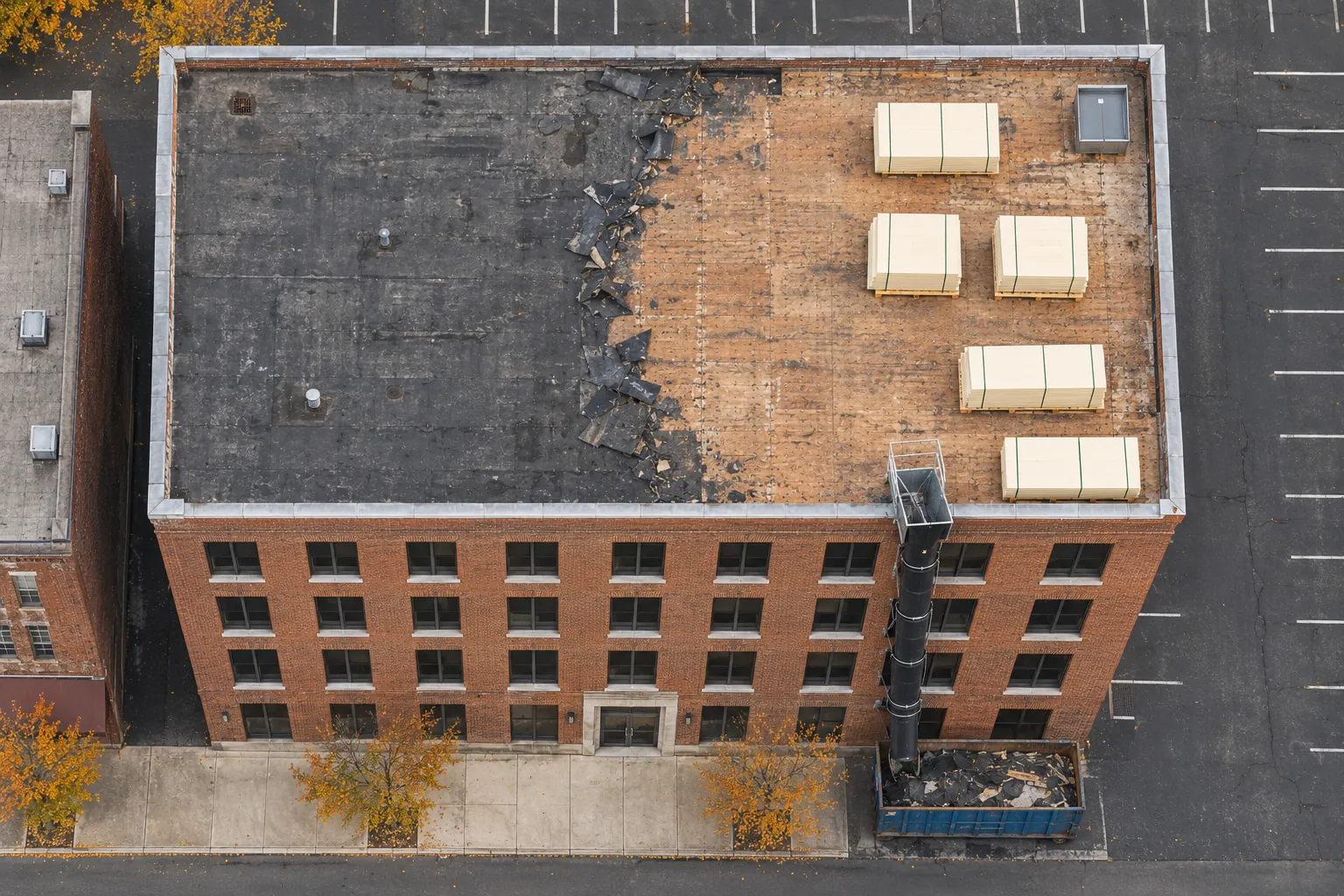
Top-down view of a brick building roof mid tear-off, half old black membrane and half bare deck with insulation bundles
  1. 1

    Inspect Your Roof

    We walk the field, edges, drains, and curbs, take core samples where moisture is suspected, and note access points and staging space at ground level.

  2. 2

    Choose the Assembly

    Deck condition, insulation, slope, and equipment decide between TPO, EPDM, or metal panels, along with attachment, seam method, and edge details.

  3. 3

    Plan Sections and Access

    Tenants, docks, and production areas set the order of work. Each section gets a staging zone, a hoist spot, and a weather plan.

  4. 4

    Tear Off and Install

    Crews remove only what they can close before leaving, repair the deck, add insulation, and install membrane or panels with flashing at each curb.

  5. 5

    Walk the Finished Roof

    Seams, terminations, drains, and curb flashing get a final check with the owner, and maintenance routes are marked for rooftop service crews.

Repair, Recover, or Replace a Harrisburg Commercial Roof

These are general patterns from low-slope and metal roofs we inspect. The inspection settles the answer for your building.

  • Usually Fits
  • Sometimes
  • Rarely
Roof ConditionRepairRecover Over ExistingTear-Off And Replace
Isolated seam splits on a dry, firm roofUsually FitsSometimesRarely
Wet insulation in one sectionSometimesRarelyUsually Fits
Two roof layers already in placeSometimesRarelyUsually Fits
Ponding at drains over a firm deckSometimesSometimesUsually Fits
Rusted laps on a metal panel roofSometimesUsually FitsSometimes
Punctures along rooftop service routesUsually FitsSometimesRarely

Where We Take Commercial Roofing Jobs

Warehouses, offices, food plants, and storefronts in these towns are where we install and replace commercial roofs most. Elsewhere? Call us or send us a message.

Commercial Roofing Questions From Harrisburg Building Owners

Cost And Records
What makes replacement pricing vary between downtown offices and logistics warehouses?

Two buildings with the same square footage can price far apart. A downtown office often brings tight street access, hoisting limits, and parapets, while a warehouse adds dock schedules, long edge runs, and more curbs. After the inspection we price the real area, layers to remove, deck repairs, insulation, flashing, and the staging each building needs.

Which records help judge the service life of an office roof?

Bring the install date, any leak log, and repair invoices. We compare them with what the inspection finds: seam condition, wet insulation, and flashing wear. A roof with the same leak fixed three times tells a different story than one with scattered, unrelated repairs, and that history shapes the repair or replacement call.

Choosing A System
Should a Harrisburg owner choose TPO or EPDM before inspecting the existing roof?

Wait until after the inspection. The deck, insulation, drainage, and rooftop equipment often point to the better membrane, and the attachment method and seam type come with that choice. Picking a material first can lock in an assembly that fits a brochure better than the building.

What should a nearby commercial roofer examine before recommending a system?

Expect a look at the whole assembly, the paths water takes, and how the building is used. Equipment access, interior areas that need to stay undisturbed, and dock or production schedules all shape the plan. On a food distribution center, those operating limits can set the work order as much as the membrane does.

Weather And Service Life
Can freeze-thaw damage at roof drains influence a replacement design?

Yes. Cracked drain flashing and ice rings show where water lingers through winter. We check the drain bowl connection, the insulation around it, and the slope feeding it, then rebuild that area with tapered insulation or a lowered drain so the new roof sheds water instead of holding a frozen pond.

How Long Does a Commercial Roof Last on a Harrisburg Building?

Service life comes down to the membrane, the installation, drainage, and foot traffic from rooftop service. Ponding water, punctures near units, and failed flashing shorten it, while walkway pads, clear drains, and regular inspections extend it. We judge remaining life from seam and flashing condition rather than the age on an invoice.

See all thirty answers on the FAQ page

Hire a Harrisburg Commercial Roofing Contractor

Tell us about the building and the roof problem. We will set up an inspection and send a written proposal for repair or replacement.

Call Us (272) 271-4248