Equipment
Unused Curbs From Old Units
- You See
- Capped curbs and blank-off plates scattered across the roof field.
- What It Means
- Each abandoned curb is a leak point. Removing it during the reroof and decking over the hole closes it for good.

As a Carlisle commercial roofing contractor, we replace warehouse and office roofs and plan curbs and access for rooftop equipment the owner expects to add.
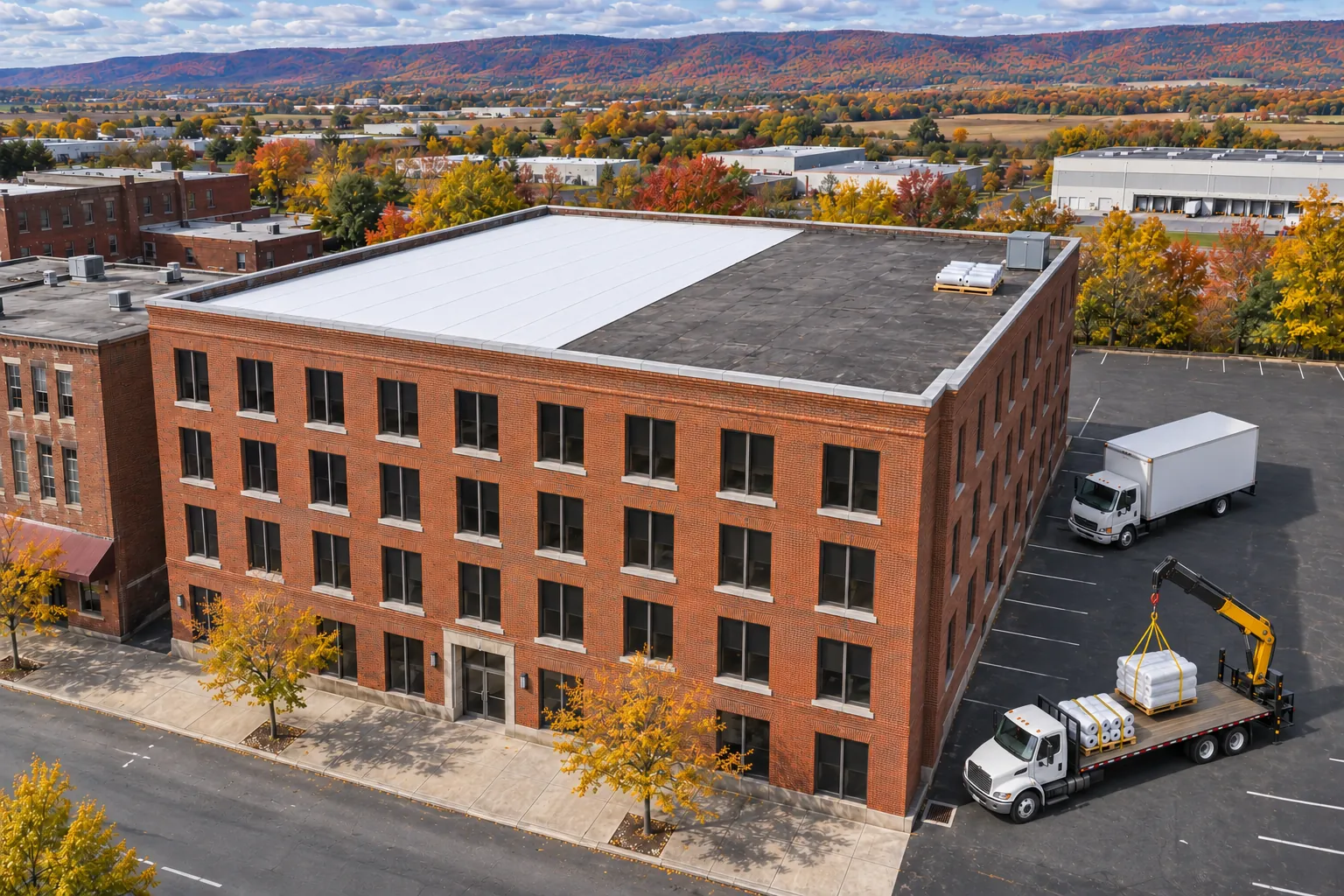
Carlisle commercial roofing work on warehouses often runs alongside expansion plans, so the reroof is the right time to prepare for new units.
When an owner knows a new rooftop unit, exhaust fan, or solar array is coming, we coordinate curb locations, support points, and access routes before the new assembly is finished. Curbs set during the reroof are flashed with the rest of the roof instead of cut in later.
Plans that are still uncertain stay listed as open items in the scope. Guessing at locations leaves openings nobody uses or forces cuts into a roof that was just installed.
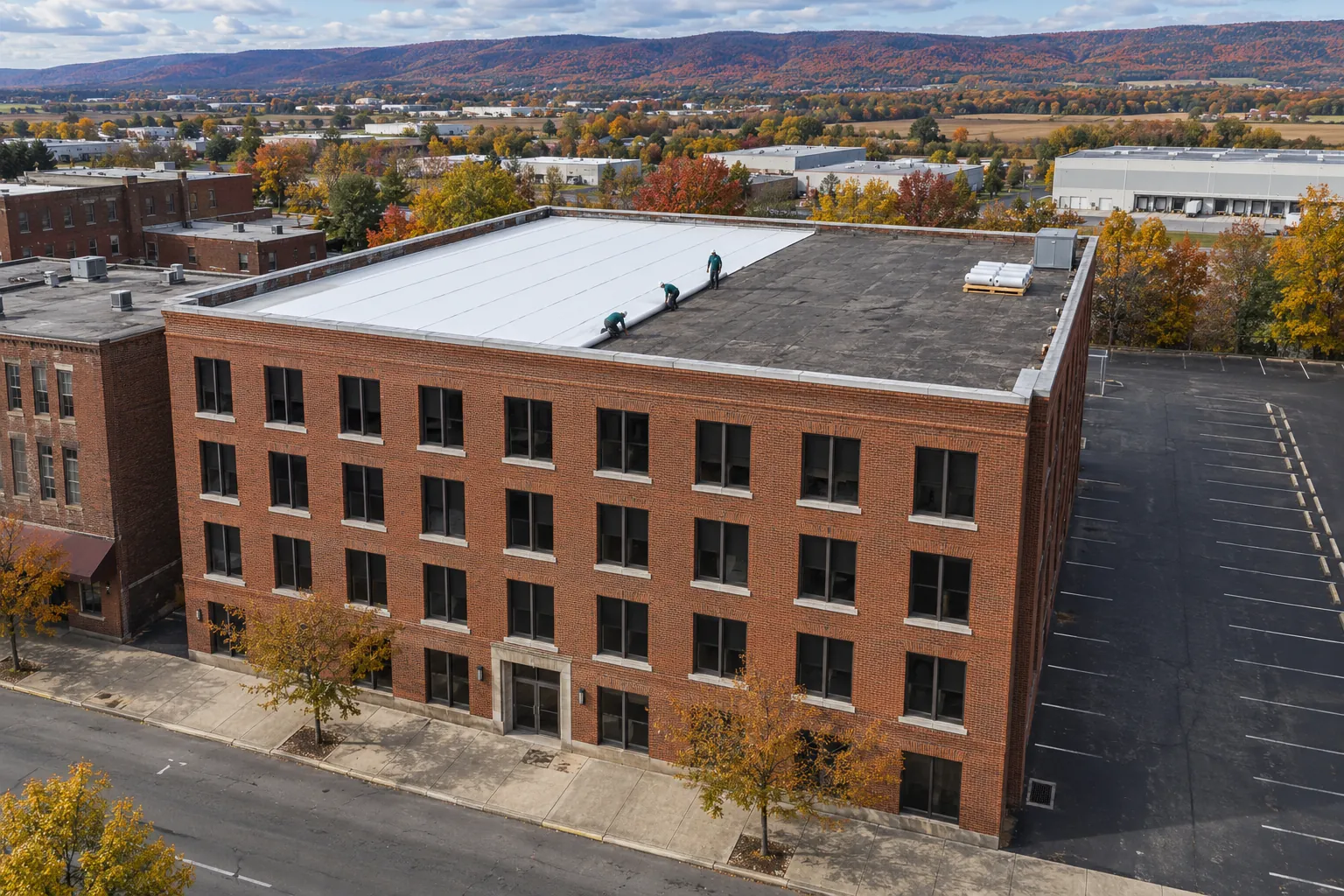
Warehouse roofs that are about to carry more equipment need these conditions settled first.
Preparing for equipment during the reroof saves a second round of cutting and flashing later.
Curbs, supports, and walkways added during the reroof are part of one price and one set of details. Adding them a year later means cutting new membrane, patching insulation, and paying for a second mobilization.
We price the known equipment work as its own line, so the owner sees what preparing for growth adds to the job.
Expansions often add rooftop units. Planning their curbs now keeps the new roof intact when they arrive.
Working room around each curb lets flashing be built well and reached for repair later.
Equipment still under review stays listed, so nobody installs a curb the plan later moves.
Each of these systems can carry added equipment when curbs and supports are planned with it.

Welded white membrane on Carlisle warehouses, with curb flashing for new units welded into the same roof instead of patched in later.
TPO roofing details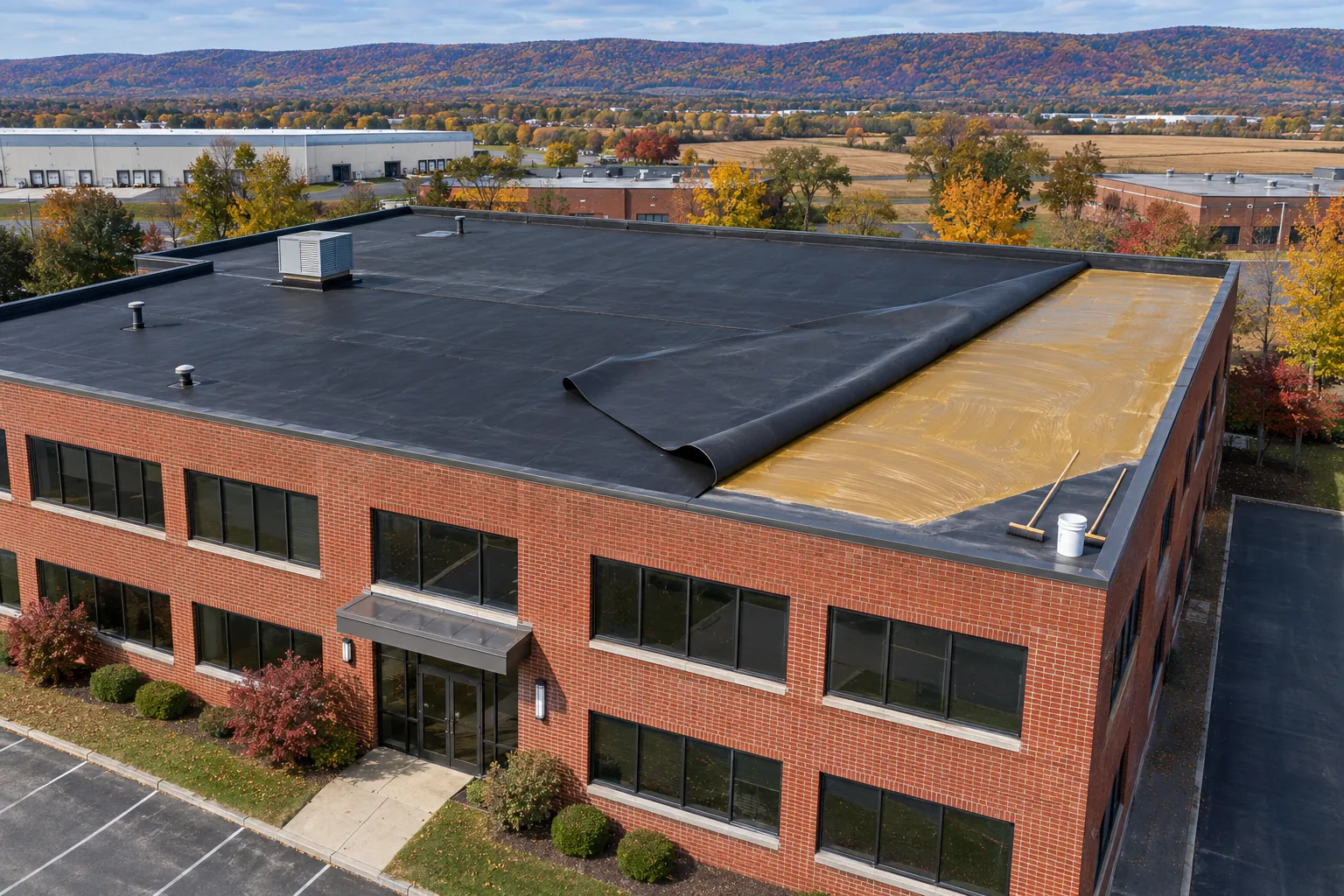
Rubber membrane for older office and warehouse sections, where new curbs get pressure-sensitive flashing matched to the sheet.
EPDM roofing details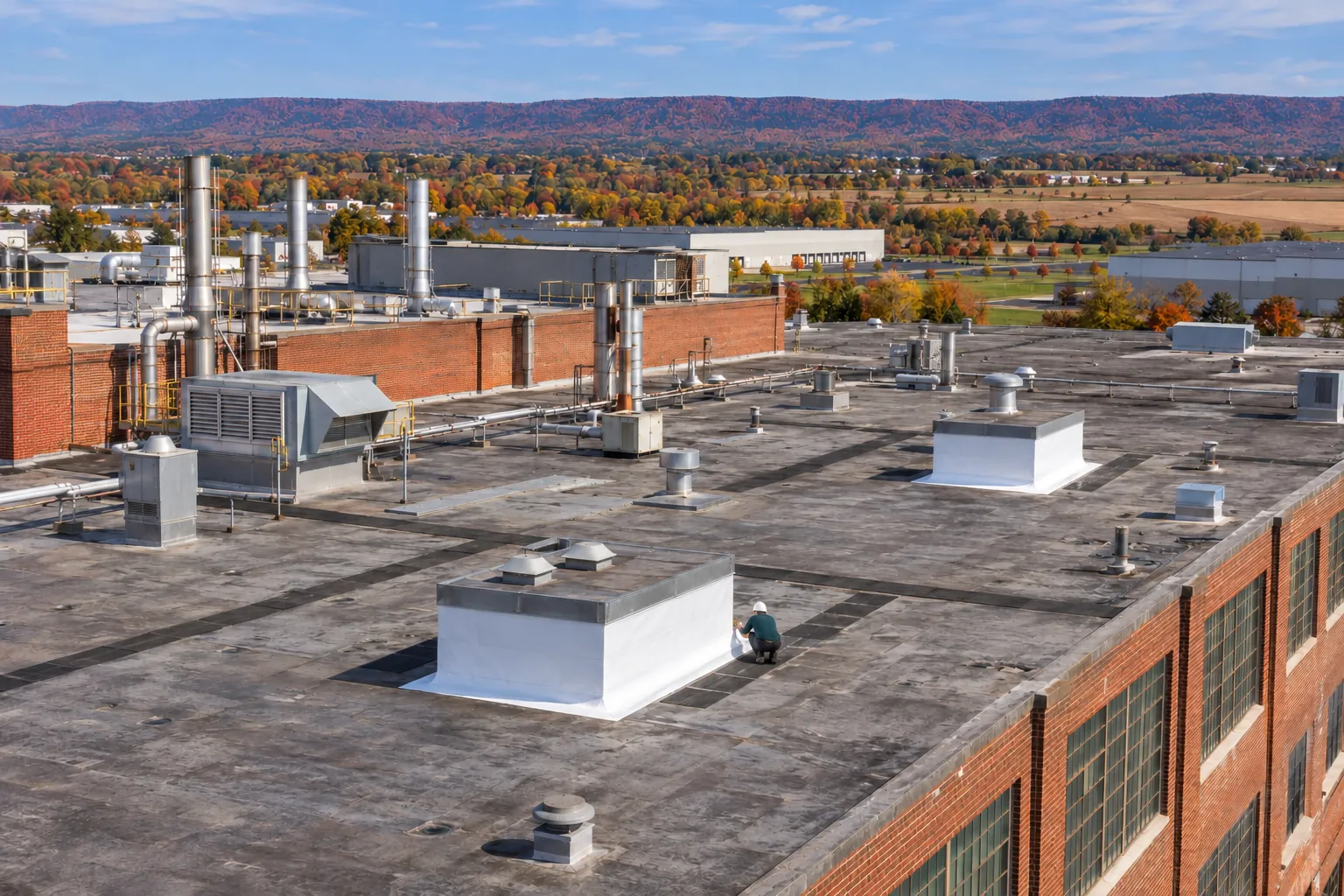
Larger distribution roofs divided into zones, with equipment trades scheduled before membrane goes down in each zone.
Industrial roofing details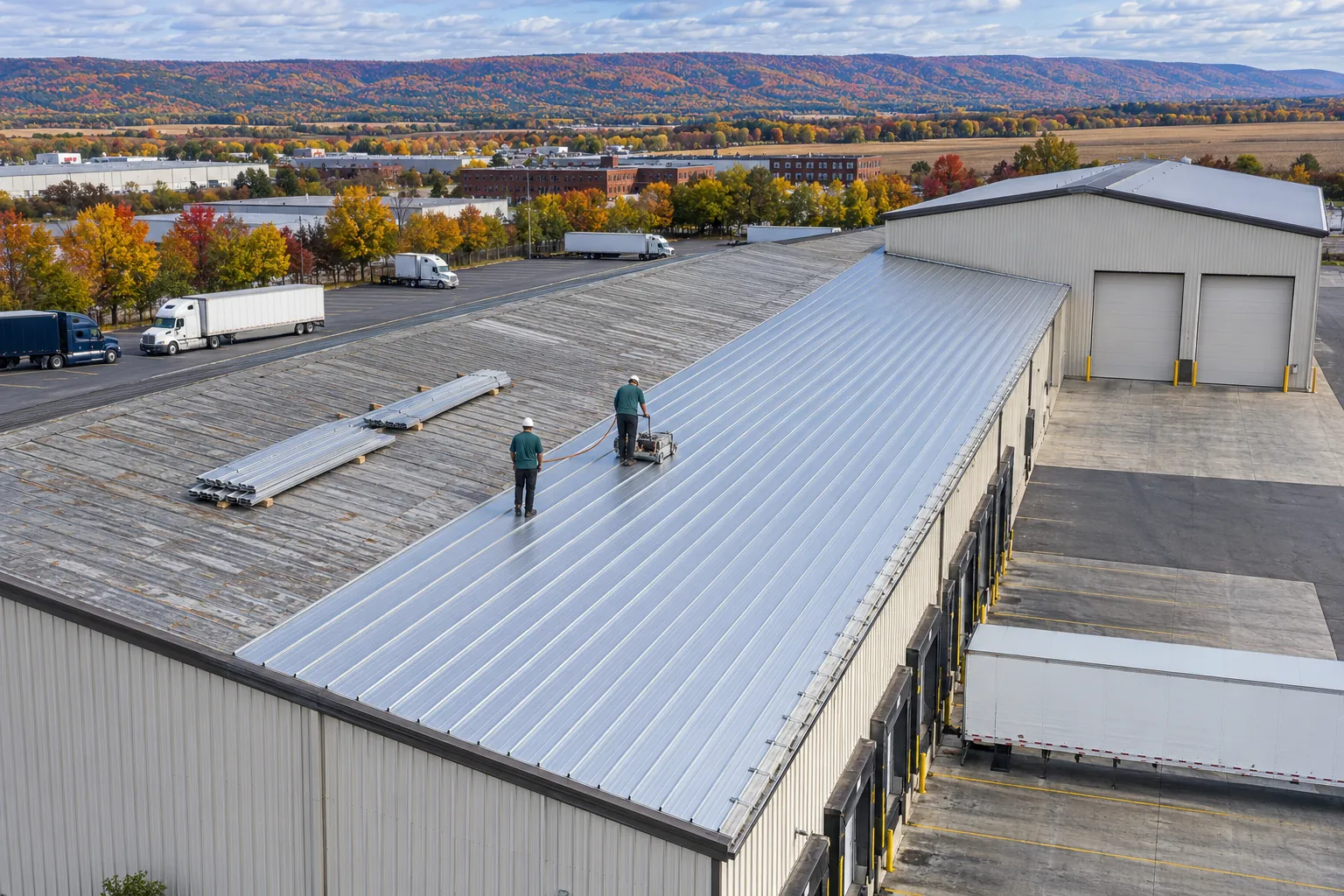
Panel roofs on shops and storage buildings, with curb locations framed and flashed while the panels go on.
Metal roofing detailsWe inspect the current roof, review the equipment plan, and price a reroof with curbs and access ready for what comes next.
Get A Free EstimateThe steps stay the same on every job here, with equipment coordination built into the middle of the work.
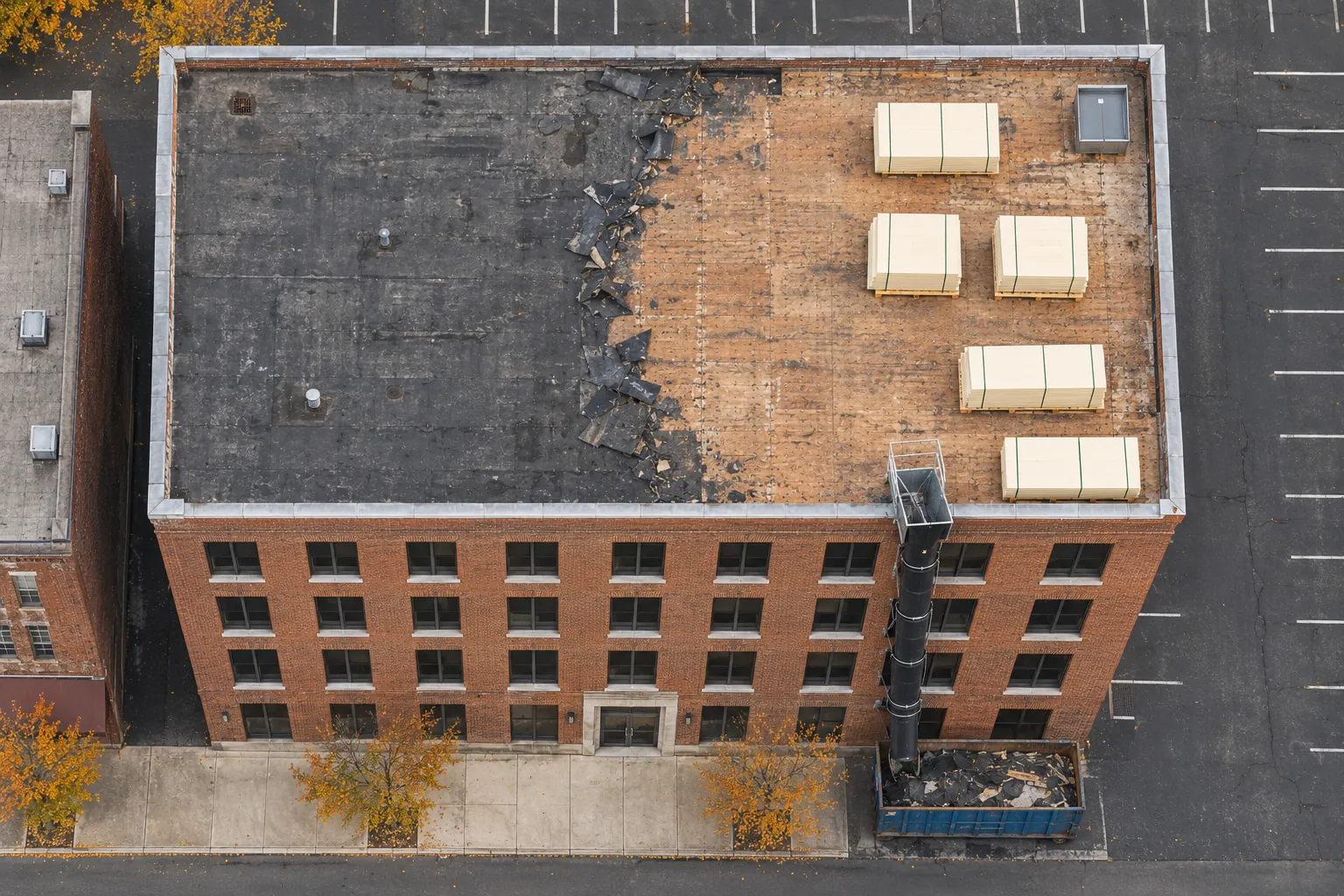
We check the membrane, insulation, drains, and existing curbs, and note which units stay, which leave, and where new ones are planned.
Curb sizes, support bases, and clearances are confirmed with the mechanical contractor before the scope is final.
Each section is stripped, insulated, and covered, with new curbs installed and flashed as the membrane reaches them.
Walkway pads lead to every current and planned unit, and open items are listed for the owner.
Besides Carlisle, we install and replace commercial roofs in these towns. Building elsewhere in the area? Please call us or send us a message.
Office roofs protected while renovation trades work overhead.
Mechanicsburg commercial roofingFood warehouse roofs detailed around refrigeration curbs and piping.
Middletown commercial roofingYes, when the future layout and support needs are known. We set curbs and access during the reroof so they are flashed with the new roof. Equipment plans still in flux stay marked as open items, because guessing can leave unused openings or force changes to roofing that was just installed.
We do, with the owner in the loop. Curb dimensions, support bases, and unit weights come from the mechanical contractor, and we confirm them before tear-off. The roof scope then lists who sets each curb and who connects each unit, so nothing falls between trades.
Roof area, layers removed, deck repairs, insulation thickness, and the number of curbs and penetrations drive most of the price. Preparing for future equipment adds curb and support work, which we price as its own line so the owner can weigh it.
Adding them during the reroof usually costs less overall. A curb set later means cutting new membrane, patching insulation, and bringing a crew back. When the equipment plan is firm, doing that work once keeps the price and the roof details simpler.
In most cases. We work in sections, keep hoisting away from active dock doors, and close each section at day end. The schedule goes to the warehouse manager ahead of time so receiving and shipping can plan around it.
We stop and confirm before setting any curb that is in question. Sections without equipment continue, and the changed layout is priced and added to the scope before work resumes in that area.
Share the building address and your equipment plans. We will inspect the roof and price a reroof ready for what comes next.